La mayoría de nosotros estamos comiendo flores todo el tiempo sin darnos cuenta. El brócoli, la coliflor y las alcachofas son flores o capullos.
Claramente, la parte de la planta que a menudo consideramos valiosa solo por su apariencia también puede ser increíblemente sabrosa.
Por eso no deberías descartar tus plantas más ornamentales. Un número sorprendente de ellos son mucho más que caras bonitas.
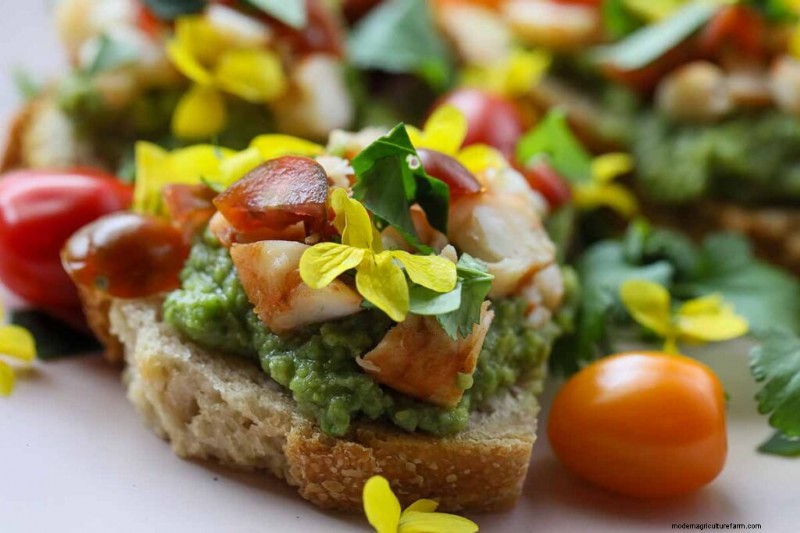
Foto de Kristine Lofgren.
Nos vinculamos con proveedores para ayudarle a encontrar productos relevantes. Si compras desde uno de nuestros enlaces, podemos ganar una comisión .
Las begonias tienen un toque cítrico fresco y los claveles son tan dulces como pueden ser. Las azucenas saben a guisantes y miel, y las gardenias son demasiado deliciosas para desperdiciarlas en ramilletes.
A lo largo de la historia, comer determinadas especies de flores ha entrado y pasado de moda.
Algunas plantas que utilizamos hoy para embellecer nuestros jardines solían ser más valoradas como comestibles. Y no estamos hablando sólo de violetas confitadas en un cupcake.
Las flores se pueden utilizar en cualquier plato que puedas imaginar.
Ya sea que quieras que tus plantas cumplan una doble función o quieras algo nuevo para poner en el plato, esta guía te presentará docenas de flores que no solo puedes comer, sino que también muchas son tan sabrosas que quizás te encuentres plantándolas junto a tus verduras en lugar de en tus parterres ornamentales.
Estas son las variedades que discutiremos:
La mayoría de las flores de las hierbas son comestibles:estragón , tomillo , orégano , salvia , y similares, pero a menos que sean particularmente únicos o tengan un sabor distinto al de las hojas, los dejamos fuera de la lista.
Siéntete libre de comerlos cuando estén presentes; la mayoría tendrán un sabor bastante similar al de las hojas.
Lo mismo ocurre con las plantas de la familia Brassicaceae. Las mostazas, en particular, producen sabrosas pepitas de flores.
Además, debes evitar lavar las flores hasta que estés listo para comerlas, a menos que se indique lo contrario. Casi todos los tipos de flores se deben consumir frescas.
Si los usas en platos calientes, espera para agregarlos hasta que estés cerca del final de la cocción o justo antes de servir. Le avisaremos cuando este no sea el caso.
Si estás cosechando en el jardín o buscando comida, asegúrate de que las flores que recojas no hayan sido rociadas con productos químicos recientemente.
O, si decide correr a un vivero para recoger un paquete de seis plantas para usar en una cena, hágalo con anticipación para poder cortar las flores existentes. y deja que crezcan otros nuevos que podrás arrancar y servir con seguridad.
Tenga en cuenta que algunas personas descubren que tienen una alergia que no conocían cuando prueban alimentos nuevos.
Por ejemplo, consumir azucenas puede provocar una reacción alérgica en algunas personas. Pruebe un pequeño mordisco de cualquier especie nueva que pruebe y luego espere unas horas antes de sumergirse de cabeza.
1. acacia
Probablemente hayas visto flores de acacia (Acacia dealbata , también conocido como árbol de mimosa) que cuelgan en racimos de los árboles o en manojos de floristería.
Dondequiera que hayas visto las distintivas flores peludas, probablemente no imaginaste llevártelas a la boca.
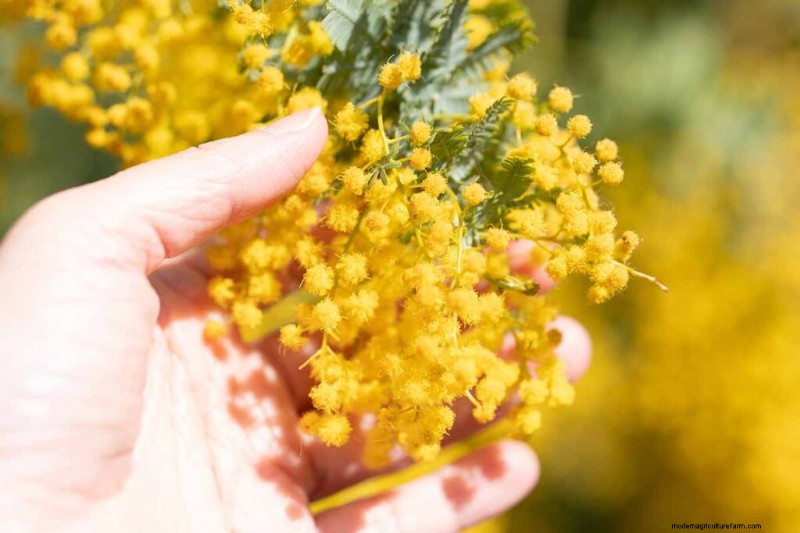
Aunque deberías hacerlo. Thomas Jefferson dijo una vez que la mimosa era “el arbusto en flor más delicioso del mundo” y la única planta, además de la naranja, que se molestaría en cultivar en su invernadero.
Tiene un sabor dulce y floral a miel y resiste la cocción.
De hecho, así es como la mayoría de la gente los usa, ya que puede resultar un poco extraño masticar las partes borrosas.
Me gustan picados o triturados para reducir la pelusa, pero creo que el sabor es mejor crudo.
Por cierto, no comas las que encuentres en un arreglo floral, a menos que estés absolutamente seguro al 100 % de que son Acacia dealbata. .
Otros miembros de este género pueden ser tóxicos. También debes asegurarte de que las flores no hayan sido rociadas con productos químicos.
En otras palabras, probablemente sea mejor quedarse con los que extraiga de un árbol y que pueda identificar positivamente.
2. Allium
Todas las flores del Allium género son comestibles, pero no todos saben muy bien.
A la hora de elegir una flor con un toque de ajo o cebolla sin mucho amargor, quédate con cebollino y puerros .
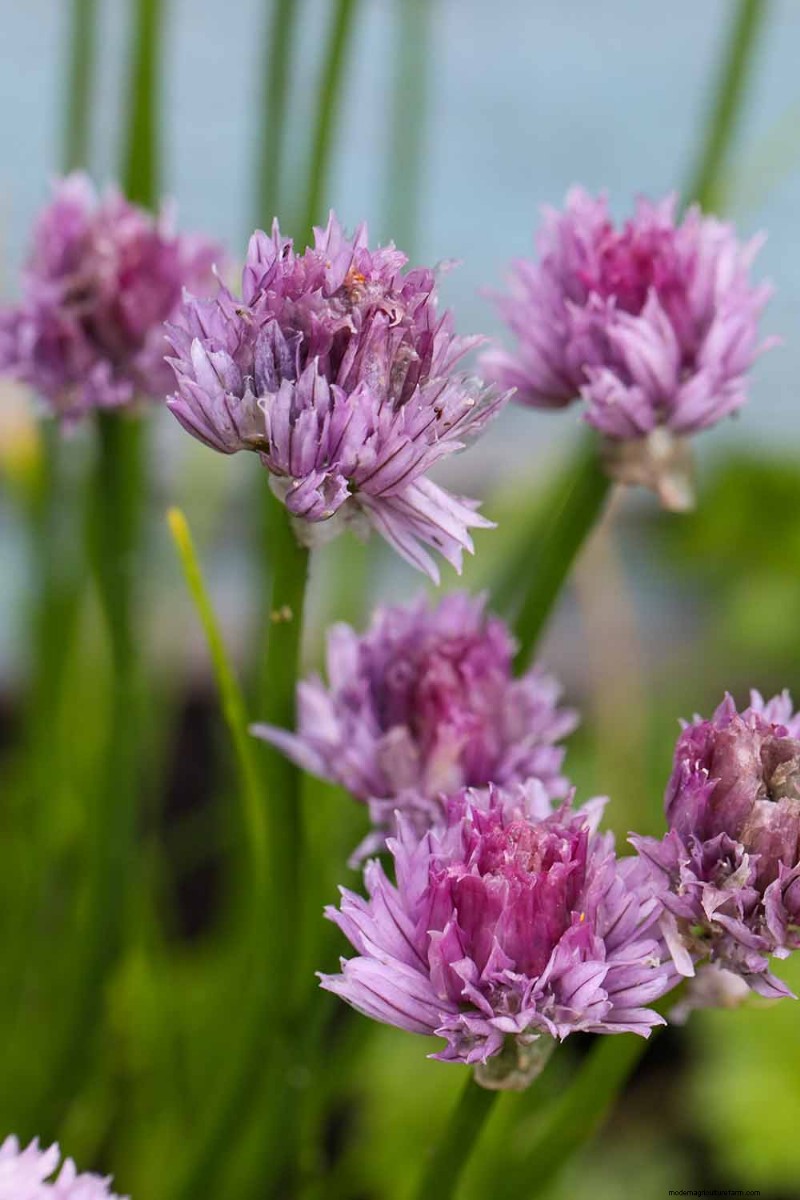
Foto de Kristine Lofgren.
Ajo , cebolla y alium ornamental Las flores pueden ser un bonito complemento para un plato, pero tienden a ser un poco amargas o duras. Sin embargo, no todos lo son, ¡así que experimenta!
Utilice estos tesoros morados, rosados o blancos para cubrir requesón, salsas a base de crema agria, sopa, arroz o tortillas, o en un sándwich de camarones, en cualquier lugar donde desee un toque de sabor a cebolla.
3. Anís Hisopo
Las flores de hisopo de anís (Agastache foeniculum ) saben muy parecido a las hojas, con un sabor dulce parecido al regaliz con solo un toque floral.
En cualquier lugar donde utilices hojas de hierbas, puedes sustituirlas por flores o puedes agregarlas a ensaladas, sopas, pastas o arroces.
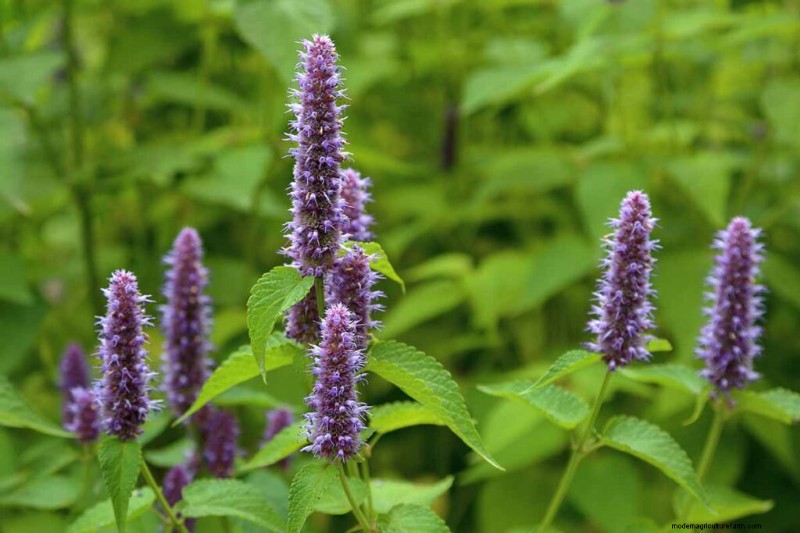
Si no sabes cómo usarlos exactamente, piensa en cómo usarías romero. o menta.
Cordero, ternera, pollo, ensalada, sopas, pasta, arroz... lo que sea, y probablemente puedas encontrar una manera de ponerle hisopo de anís.
Si bien puedes comerte toda la cabeza de la flor si la cortas finamente, es mejor arrancar las flores individuales de la cabeza peluda antes de comerlas.
Aprende cómo cultivar flores de hisopo de anís en nuestra guía.
4. Botón de Licenciatura
Para darle un toque de pepino y mucho color, añade botones de soltero (Centaurea cyanus ) para tu ensalada o como guarnición de un postre.
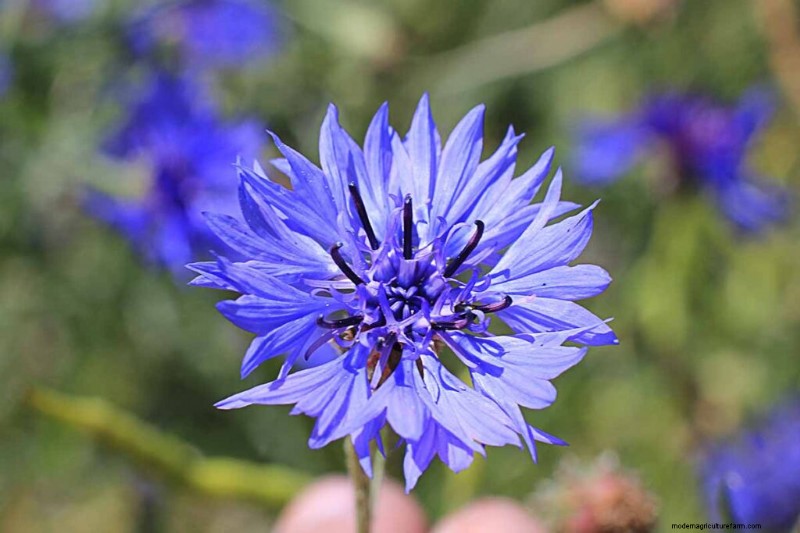
El azul cobalto de los acianos los hace tan llamativos en el jardín como en la cocina.
Colócalos encima de un plato de pasta para sorprender a tus invitados o hornéalos para hacer pasteles y galletas y darle un toque de color natural.
El sabor tiene un poco de dulzura picante que funciona bien tanto en postres como en platos salados.
Consulte nuestra guía para hacer crecer los botones de soltero para agregar estas flores a tu jardín.
5. Bálsamo de Abeja
Bergamota silvestre (Monarda didyma ) también conocido como bálsamo de abeja, tiene un sabor mentolado, ligeramente dulce, parecido al orégano. Al cocinar, el color vibrante resalta tanto como el sabor.
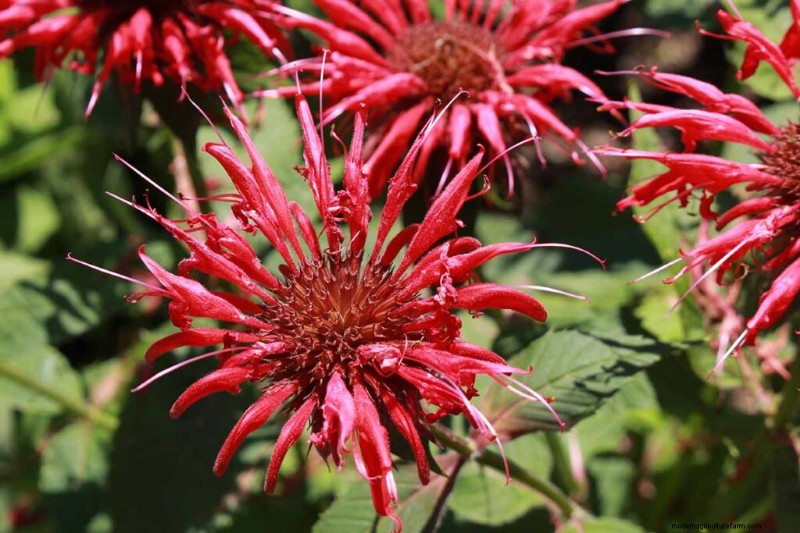
Solo asegúrate de arrancar los pétalos del cáliz. Puedes comer el cáliz si lo cocinas y lo cortas en rodajas finas, pero si quieres algo parecido a una hierba, quédate con los pétalos.
El bálsamo de abeja es una adición particularmente buena a la salsa (junto con un ácido como el jugo de lima, hierbas frescas como el cilantro o el perejil y los tomates), pero también es excelente en té, pan, mermelada, galletas y cócteles.
Aprende cómo cultivar bálsamo de abejas en nuestra guía .
6. Begonia
En lugares sombreados de todo el mundo, puedes encontrar varios miembros de la Begonia. género floreciendo.
Pero si bien son fabulosos para iluminar una mancha oscura, muchas personas no se dan cuenta de que también son ingredientes de cocina versátiles.
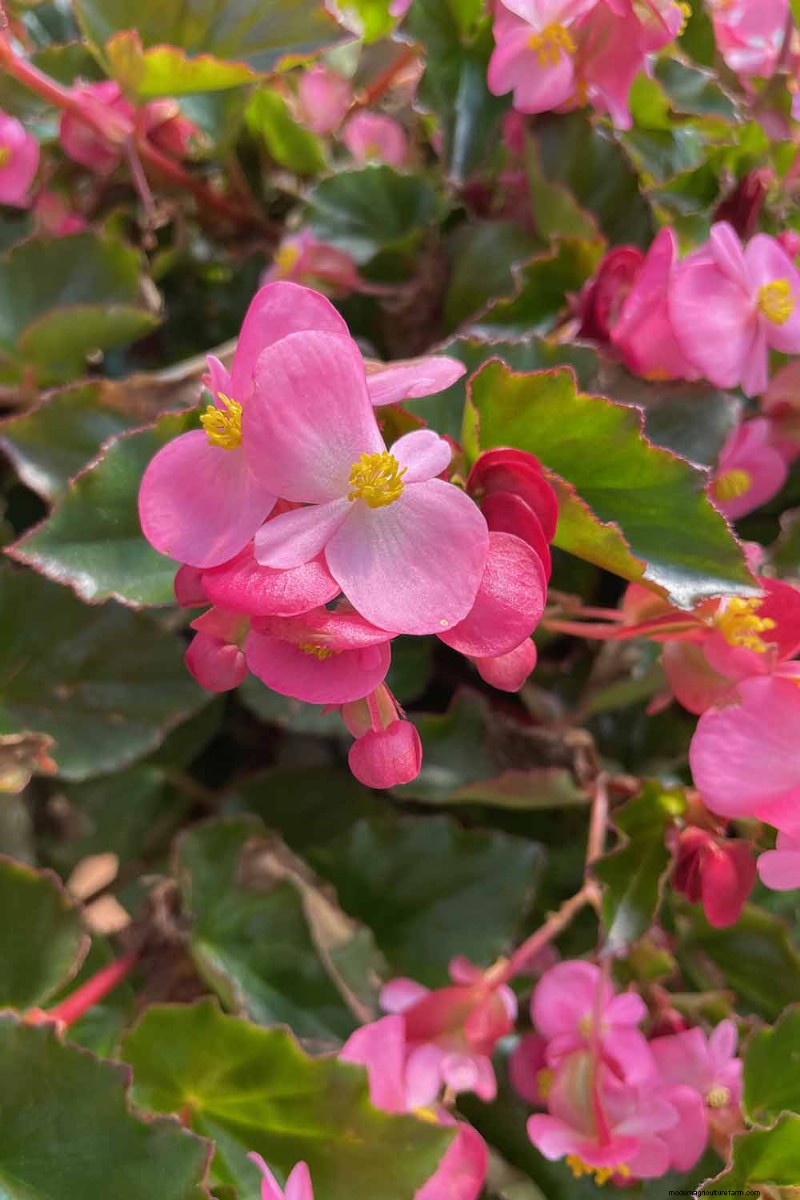
Foto de Kristine Lofgren.
Todas las begonias son comestibles, pero la cera (B. x semperflorens ) y begonias tuberosas (B. x tuberhybrida ) son los más sabrosos.
Los suculentos pétalos tienen un crujido parecido al del pepino y un ligero sabor cítrico, lo que los hace deliciosos en ensaladas de verduras y pescado. Pruébalos picados en panzanella y serás un converso.
¿No tienes una receta preferida? Comience con esta panzanella de rábano de nuestro sitio hermano, Foodal .
7. Bayas
Las bayas son una excelente elección si buscas flores comestibles.
Todos los Rubus y costillas especies, así como fresas (Fragaria sp. ), arándanos (Vacuna spp.) y moreras (Morus alba ) tienen flores comestibles.
Frambuesas , moras , grosellas negras, grosellas – ¡Vale la pena probarlos todos!
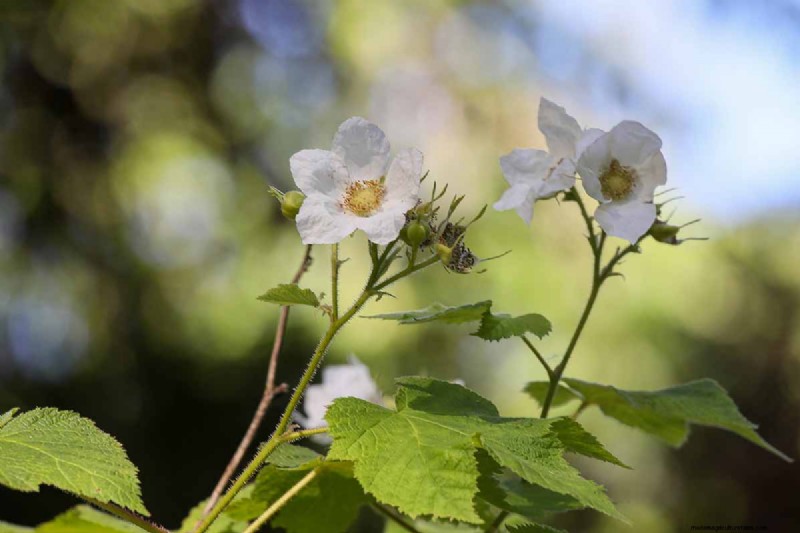
Una flor de arándano,
Rubus spectabilis . Foto de Kristine Lofgren.
Recuerda que si arrancas las flores no se formará un fruto en ese lugar.
Las flores simples son sabrosas, pero nada comparadas con la fruta en sí, así que equilibra tu hambre de flores con tu hambre de frutas y ¡no recojas demasiado!
Por otro lado, si tu jardín está invadido de zarzas , tienes muchas delicias florales esperando a ser cosechadas.
8. Borraja
Borraja (Borago officinalis ) no requiere prácticamente ningún esfuerzo para crecer y las celestiales flores azules en forma de estrella son tan sabrosas como hermosas.
Con un sabor que recuerda al pepino dulce, aportan un toque especial a ensaladas, sopas, platos de pescado o bebidas.
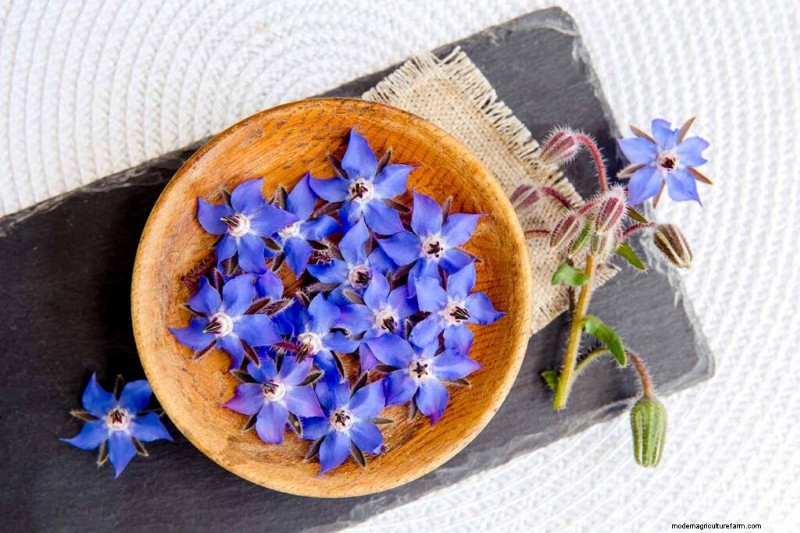
Mézclalos con tomates y pepino en una vinagreta o úsalos como guarnición en limonada para disfrutar del verano.
La borraja es una de las mejores flores culinarias y, además, una de las pocas azules.
Si no usas todos los tuyos inmediatamente después de recogerlos, envuélvelos sin apretar en una toalla de papel húmeda y colócalos en el refrigerador.
Aprende cómo plantar y cultivar borraja aquí .
9. Buganvilla
Con sus espesas enredaderas y flores vivas, la buganvilla (Bougainvillea spp.) se ha ganado un lugar como corona de gloria en muchos jardines.
Las llamadas “flores” son en realidad brácteas, que son hojas modificadas y coloreadas. Esta es la parte comestible. Tira las flores pequeñas y estrechas que se encuentran en el centro de cada bráctea.
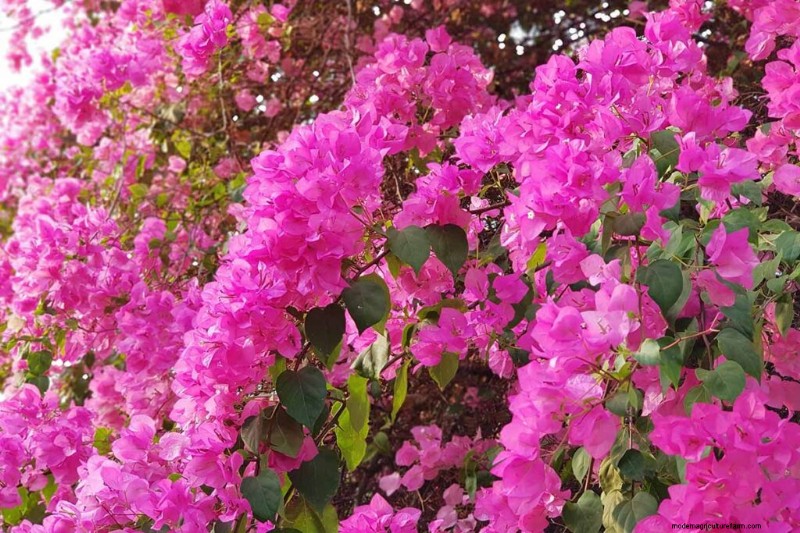
Es mejor utilizar las brácteas frescas, aunque también puedes remojarlas en té, pero no las dejes en agua caliente durante más de cinco minutos aproximadamente.
Pierden su sabor dulce y empiezan a volverse extremadamente amargos.
Una agua fresca casera hecha con agua fría, jugo de lima, azúcar y brácteas de buganvilla es particularmente sabrosa.
Aprenda más sobre el cultivo de buganvillas con nuestra guía .
10. Caléndula
Caléndula (Caléndula spp.) las flores son conocidas por sus usos ornamentales y medicinales, e incluso tenemos una guía que le guiará en su uso con fines medicinales. .
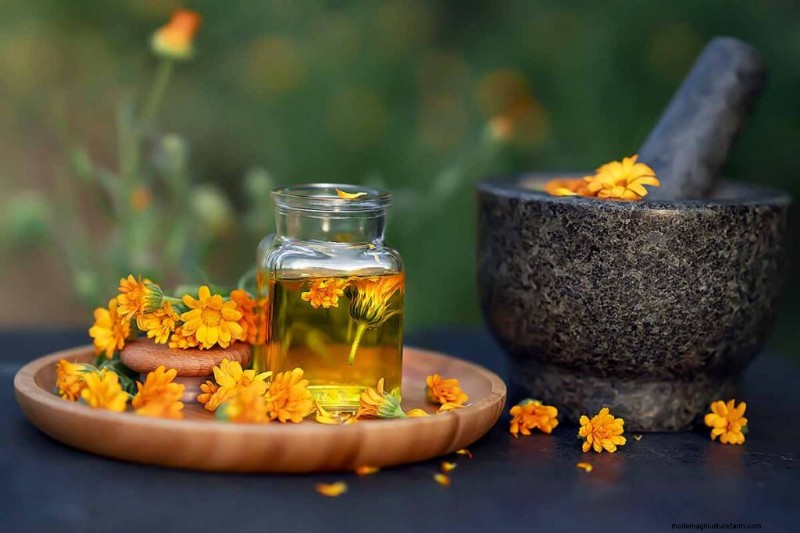
También conocidas como caléndulas, como ocurre con otros tipos de caléndulas (Tagetes spp.), puedes usarlos para dar color a los platos como lo harías con el azafrán, con un precioso tono anaranjado.
Sin embargo, estas flores carecen del sabor distintivo del azafrán.
Utilice la caléndula para infusionar aceites y mantequilla, o en platos de pescado como ensaladas y paella. O hornéelo en una tanda de galletas de mantequilla o bollos realzados con las flores.
Puedes aprender cómo cultivar caléndula en nuestra guía .
11. camelia
Camelias (Camelia spp.) son vistosas y dulces, lo que las hace ideales como guarnición de postres o macedonias de frutas.
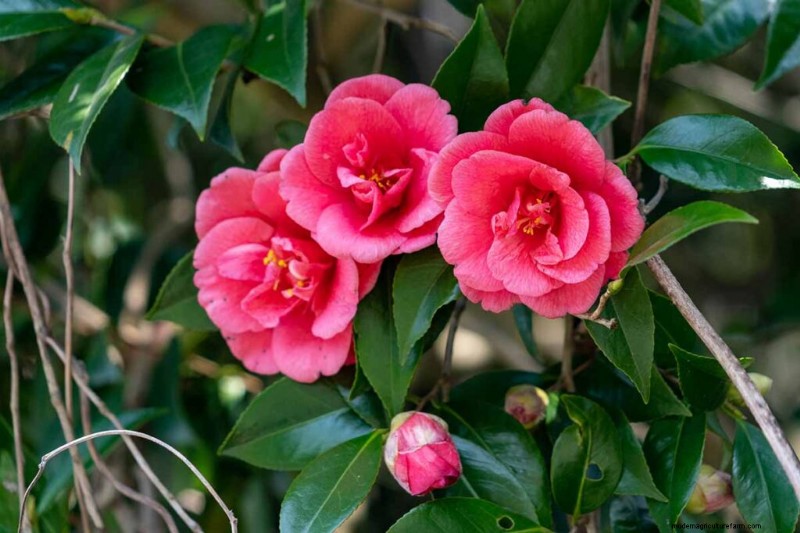
También puedes confitar los pétalos para ponerlos en pasteles, galletas, pasteles y otros dulces. Puedes aprender a hacer flores confitadas en nuestro sitio hermano, Foodal .
Aprende cómo cultivar flores de camelia en nuestra guía .
12. claveles
Aquí hemos estado disfrutando de nuestro pequeño y feliz clavel de recuperación (Dianthus caryophyllus ) ramos y luego tirarlos a la basura, cuando podríamos haberlos estado comiendo todo el tiempo.
Bueno, tal vez no si ese ramo vino del supermercado o de la floristería y no podemos saber con seguridad si las flores han sido tratadas con productos químicos. Pero entiendes el sentimiento.
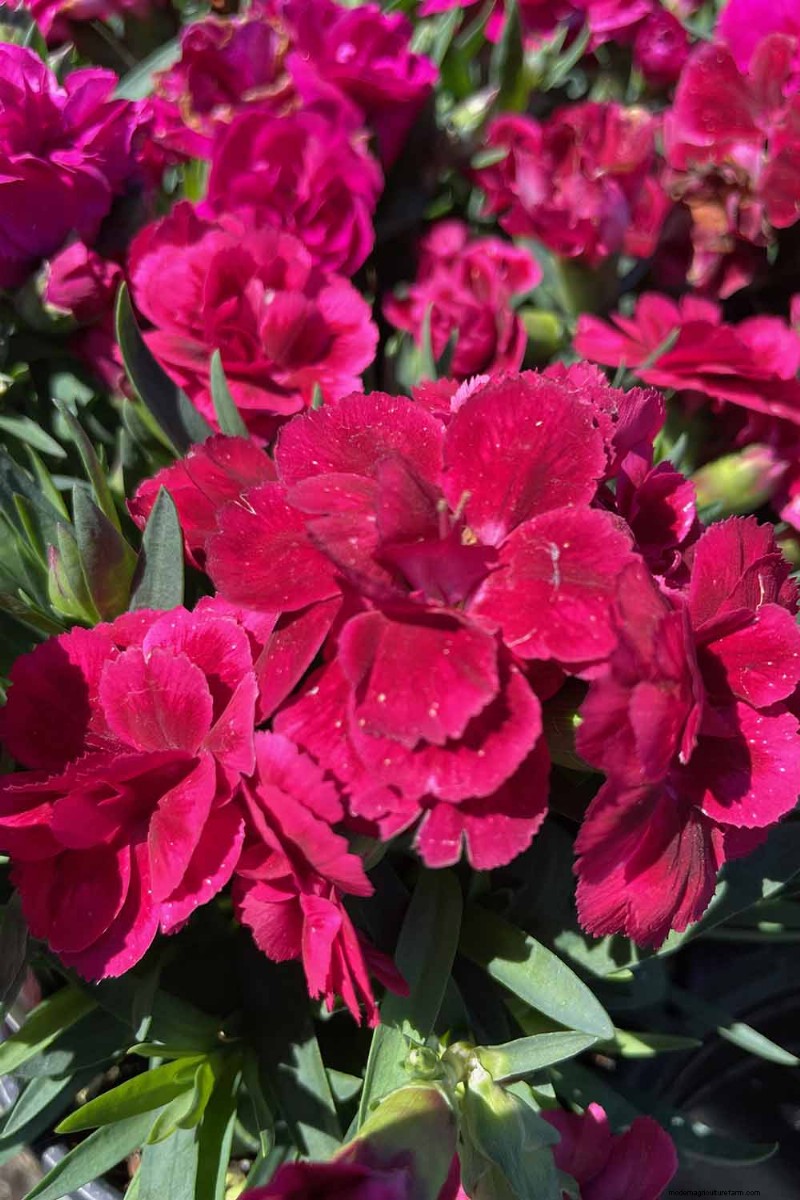
Foto de Kristine Lofgren.
Quizás saber que son comestibles ayude a hacerlos más populares en los jardines, ya que los claveles parecen estar constantemente pasando de moda.
Si bien puedes comer los que compras en la floristería, si sabes que fueron cultivados y arreglados sin ser rociados con ningún químico potencialmente tóxico, es mejor cultivar los tuyos propios en el jardín.
De esta manera quedarán más tiernos y sabrosos, y no tendrás que preocuparte por ningún aditivo no comestible.
Los claveles son extremadamente dulces y ligeramente florales. En realidad, se utilizan como ingrediente en el licor chartreuse por ese motivo.
Se recomienda recortar los talones para eliminar el amargor, pero incluso si no lo haces, estas flores seguirán siendo dulces.
Los pétalos son fantásticos en mermelada de fresa, tartas y ensaladas, como aderezo para postres, encurtidos en vinagre de manzana con canela o confitados. Intente agregarlos también a buñuelos o crepes.
Encuentre consejos sobre cómo cultivar y cuidar flores de clavel aquí .
13. manzanilla
Si has tomado té de manzanilla, entonces sabes a qué sabe esta flor.
Pero Matricaria chamomilla y Chamaemelum nobile tiene un sabor a manzana que se presta para mucho más que bebidas preparadas calientes.
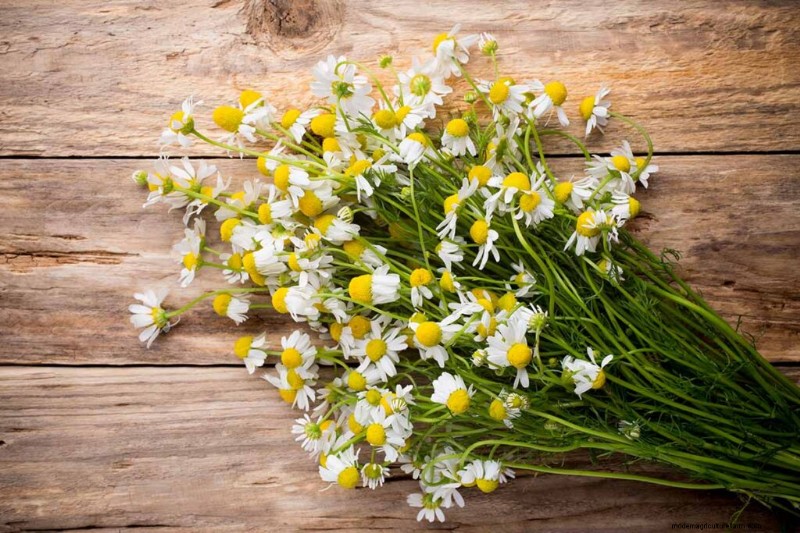
Mezcle las cabezas de margarita en sopa de miso, avena, cereal, ensaladas, cócteles o masa para galletas.
También saben fantásticos en alimentos más dulces como mermelada, helado, dulces o pasteles. En cualquier lugar donde un toque de manzana estaría bien es una buena opción.
Consulta nuestra guía para aprender a cultivar manzanilla .
14. Achicoria
Achicoria (Chicorum intybus ) las flores se abren durante un día y luego desaparecen, lo que creo que las hace un poco especiales.
Y su vibrante tono azul violeta los hace aún más bienvenidos en el jardín y en nuestros menús.
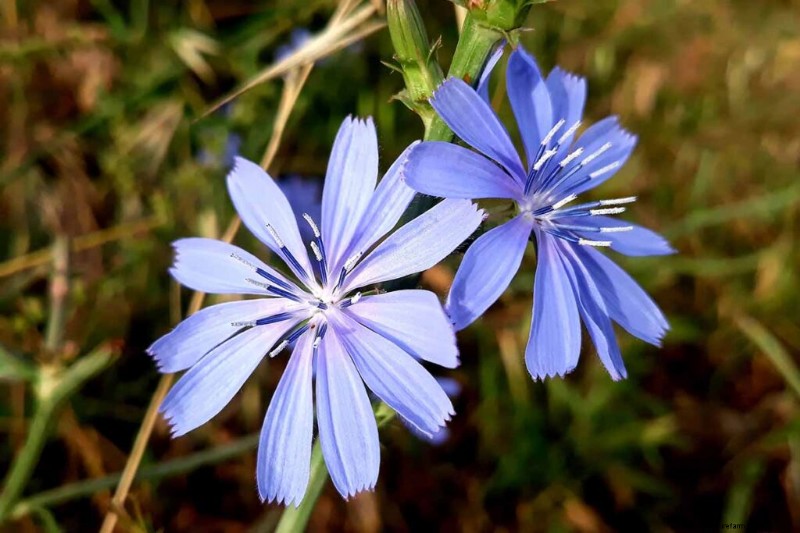
Este pariente salvaje de la radicchio comparte la amargura de su prima, así que use estas flores con moderación. Un pequeño toque en una ensalada o plato de verduras es suficiente.
Nuestra guía para cultivar achicoria proporciona instrucciones de cultivo.
15. Crisantemo
Indiscutiblemente elegantes, los crisantemos (Crisantemo spp.) son bellezas clásicas.
Coloca algunos crisantemos en la ventana de tu cocina y tendrás un suministro constante de pétalos de colores para agregar algo especial a tu cocina.
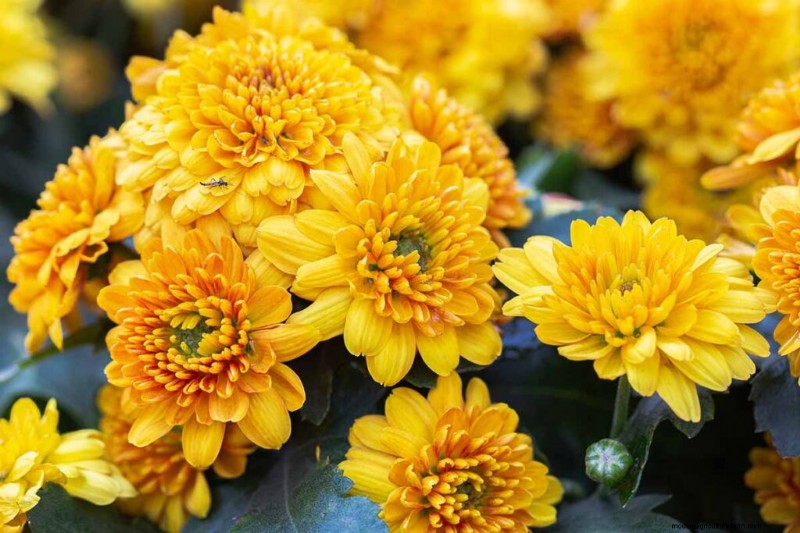
Enjuague bien los pétalos antes de usarlos, especialmente si sus madres cultivaban al aire libre.
Los insectos pueden esconderse fácilmente en todos esos rincones. Me gusta remojar el mío durante unos minutos en agua fría para ahuyentar a los autoestopistas. Déjalos secar sobre una toalla antes de usarlos.
A continuación, llega el momento de quitar los talones para reducir el amargor. Agarre el tallo de la planta y saque los pétalos con las yemas de los dedos.
Recorta las partes blancas con unas tijeras mientras todavía las sostienes. Coloca los pétalos preparados en un bol y repite.
Agregue pétalos de mamá a platos de pescado, sopas y sopas, ensaladas, salteados, platos con huevo, papas y sándwiches.
Blanquearlos o remojarlos en agua salada durante 15 minutos les da a los pétalos un sabor más suave si te parecen demasiado fuertes.
Obtenga más información sobre el cultivo de crisantemos aquí .
16. Cítricos
No importa si tienes árboles de limón, lima, naranja, pomelo o kumquat, las flores de todos los cítricos género Los árboles son igualmente comestibles y todos saben más o menos igual.
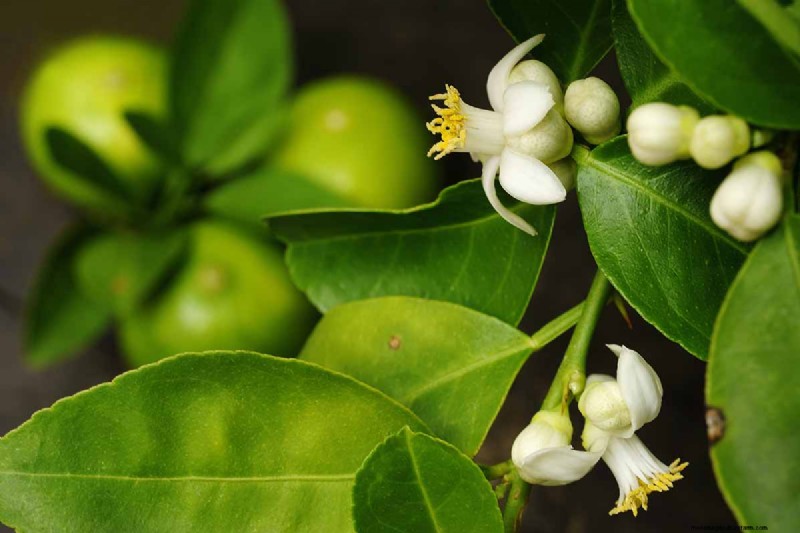
Añádelos a cócteles, postres, ensaladas dulces, platos de cangrejo, sopas frías, platos de pescado o pollo, soufflés o helados.
Si no has comido ensalada de cangrejo con flores de cítricos, ¡no has vivido! Realmente, cualquier cosa que sepa bien con un poco de sabor cítrico puede ser igual de buena con unas cuantas flores delicadas.
17. trébol
A las abejas les encantan, pero algunos jardineros temen ver un trébol (Trifolium spp.) en el patio trasero. Independientemente de cómo te sientas, vale la pena mordisquear estas bonitas flores.
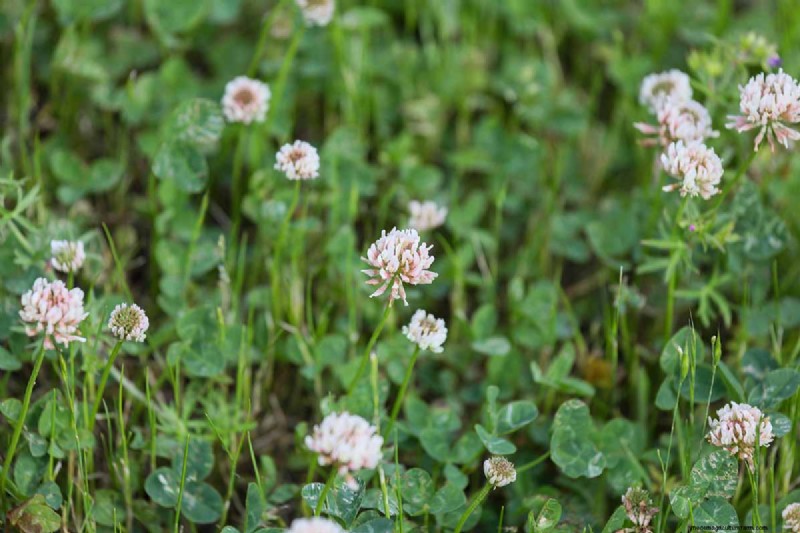
Foto de Kristine Lofgren.
Una probada y supongo que te enamorarás. Esto se debe a que tienen un sabor dulce parecido a la miel que muchos niños aprovechan cuando arrancan una flor y chupan el néctar.
Puedes secar las flores después de lavarlas como lo harías con cualquier hierba. De esa forma podrás disfrutarlos durante todo el invierno.
Simplemente no recojas ni uses flores que ya se estén poniendo marrones . No son muy apetecibles.
Los tréboles son deliciosos como té, con huevos, en mantequilla compuesta, horneados en pan o en ensaladas.
18. Coneflower
Coneflowers (Echinacea spp.) son tesoros de América del Norte.
Son maravillas medicinales, estrellas ornamentales y también cultivadores prolíficos que aparentemente son inmunes a la mayoría de los problemas que pueden acabar con otras especies comunes de jardín.
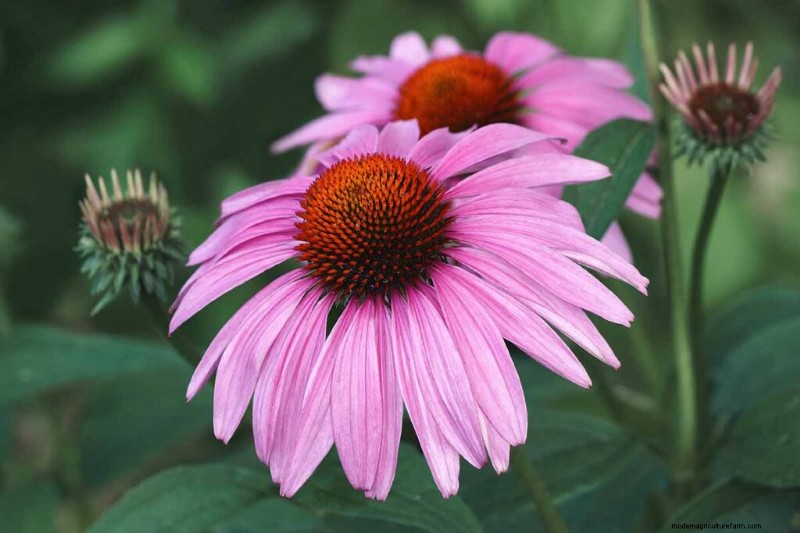
Los pétalos de las flores de todas las Echinacea Las especies no sólo son comestibles, sino que personalmente las encuentro deliciosas. No todo el mundo está de acuerdo.
Es cierto que son un poco amargos y tienen un sabor floral extremadamente picante. Los cultivares con flores fragantes como "Fragrant Angel" tienen pétalos menos amargos.
Coneflower de cabeza verde, también conocida como shochan o Rudbeckia laciniata – es la especie más sabrosa con diferencia, aunque técnicamente no es una Echinacea especie de “equinácea”.
Estas plantas no solo comparten el nombre común de “coneflower”, sino que en realidad pertenecen a la misma tribu dentro de la familia Asteraceae, Heliantheae, y están muy estrechamente relacionadas.
El pueblo Cherokee ha estado comiendo este tipo de equinácea durante siglos y vale la pena buscarla.
Quita los pétalos de la cabeza y mézclalos en sopas o ensaladas, especialmente aquellas que resisten un sabor más fuerte, como la panzanella.
Mucha gente pone raíz de equinácea en la sopa de pollo como tónico para combatir el resfriado invernal, pero a mí me gusta poder saborear las flores.
Me encanta la sopa de pollo tailandesa o mexicana con un montón de pétalos encima antes de servir.
Si está buscando una excelente receta de sopa de pollo mexicana instantánea, visite nuestro sitio hermano, Foodal. .
No comas las flores de Susan de ojos negros estrechamente relacionadas (R.hirta ). Si bien las raíces son comestibles, se deben evitar las flores y las cabezas de las semillas.
Los pétalos no son tóxicos, pero algunas personas experimentan alergias al consumirlos y no saben muy bien. Las cabezas de las semillas son ligeramente tóxicas.
Obtenga más información sobre el cultivo de equináceas aquí .
19. Cosmos
No todos los cosmos son comestibles. De hecho, deberías ceñirte a Cosmos sulphureus y C. caudato exclusivamente.
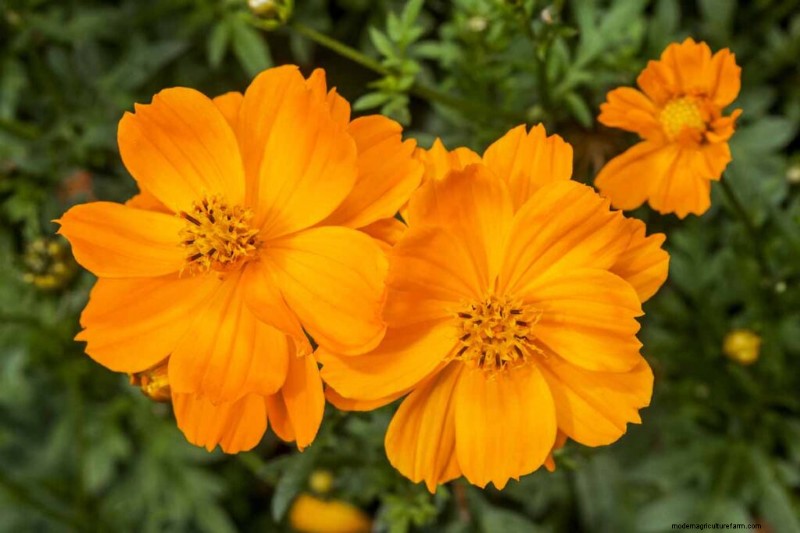
Tienen sabores ligeramente diferentes:el primero sabe a hierbas y a lechuga, mientras que el segundo tiene un sabor dulce y afrutado, similar a una fresa o un mango.
En Indonesia, donde se consume con frecuencia, C. caudato se conoce como kenikir. En Malasia se llama ulam raja, que se traduce como "ensalada del rey". Me parece bien.
Obtenga más información sobre los cosmos y cómo cultivarlos aquí .
20. Dalia
La primera vez que alguien me dijo que comiera una dalia, Dahlia pinnata Para ser exactos, pensé que me estaban tomando el pelo. De ninguna manera esas flores grandes y dramáticas podrían saber algo bueno.
Resulta que yo tenía razón, pero también mi amigo. Las especies que probé no fueron las mejores, pero en los años siguientes tuve algunas que eran increíbles.
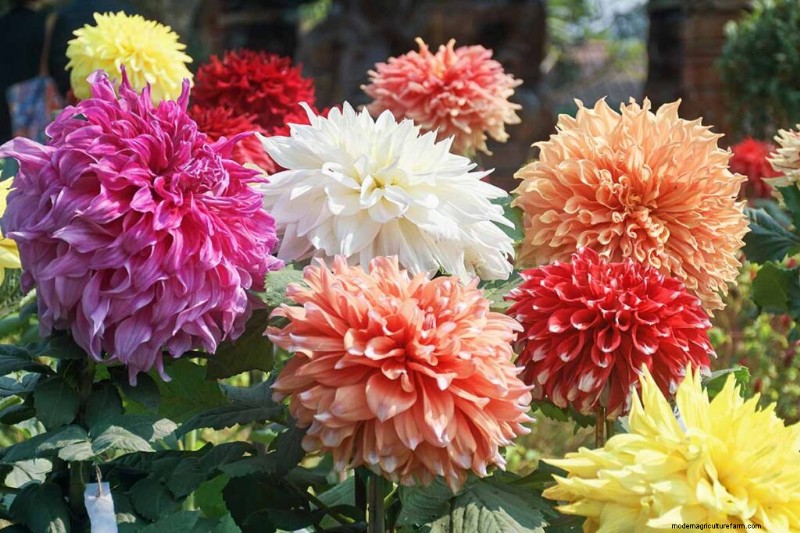
Las dalias están relacionadas con los girasoles y las alcachofas de Jerusalén. . Todas las especies son comestibles y algunas tienen un sabor fantástico.
Se cultivaron en América del Sur como cultivo alimentario mucho antes de que se convirtieran en las bellezas que conocemos hoy.
Encontrar dalias con un sabor fabuloso es cuestión de prueba y error. Algunas son maravillosas y saben a castaña de agua floral.
Otros son un poco más insulsos, pero ciertamente no son desagradables. Mi favorito hasta la fecha es D. coccinea – Probé la raíz y la flor, y ambas estaban fantásticas.
Pero no dejes que eso te limite. Cualquier especie de dalia tiene el potencial de producir un cultivar o híbrido sabroso.
De hecho, si encuentras uno que te guste, ¡corre la voz! Háganos saber en los comentarios qué variedad es su mejor elección.
La textura fresca y crujiente añade contraste a los platos de queso y ensaladas.
También destacan como aderezo colorido para platos de pescado o pasta. Pica los pétalos para hacer una salsa o úsalos para adornar un plato de arroz.
Nuestra guía para cultivar dalias proporciona instrucciones de cultivo.
21. margarita
Estas “bellezas eternas”:ese es el nombre botánico de la margarita común, Bellis perennis significa – se puede consumir desde que emergen los cogollos hasta que los pétalos empiezan a marchitarse.
En realidad, los cogollos son menos amargos que las flores abiertas y se pueden encurtir tal como se haría con los cogollos de diente de león para hacer “alcaparras”.
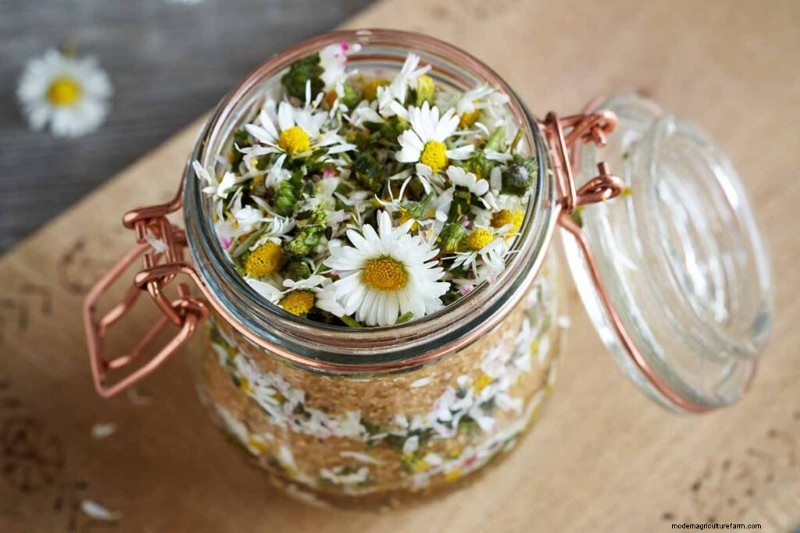
Me gusta agregar las flores al requesón, a la salsa de espinacas y a las ensaladas, pero también quedan ricas en mantequilla compuesta o confitadas.
Sólo tenga en cuenta que a muchas plantas se les ha dado el apodo común de "margarita".
Plantas como Shasta (Leucanthemum × magnífico ) , Gerbera (Gerbera spp.) y margaritas de Montauk (Nipponanthemum nipponicum ) no son verdaderas margaritas y no son comestibles.
22. diente de león
Las hojas tienden a atraer toda la atención en el ámbito de la comestibilidad, pero definitivamente deberías darle diente de león (Taraxacum spp.) también florece un tiro.
Después de cosecharlas, remójalas en agua fría o a temperatura ambiente durante unos minutos para expulsar cualquier insecto que pueda estar escondido en la inflorescencia.
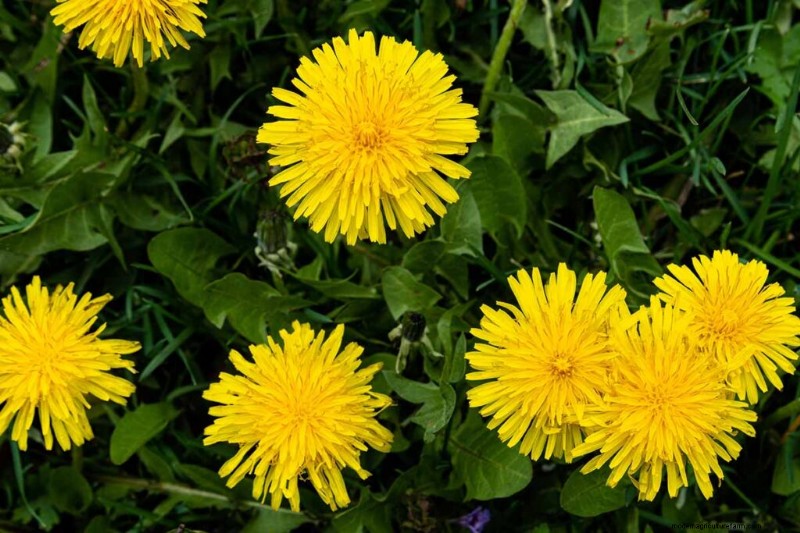
Los dientes de león son increíblemente versátiles . Escoge los cogollos verdes compactos y encurtelos para hacer "alcaparras".
O agregue los cogollos con sal, pimienta y mantequilla y saltee durante unos minutos para obtener una delicia con un sabor similar a los champiñones.
Las flores se pueden utilizar para hacer un jarabe de diente de león en infusión.
Después de arrancar los pétalos y lavarlos suavemente en agua fría, hierva una mezcla de partes iguales de agua y azúcar granulada en una cacerola para disolver el azúcar y hacer un almíbar simple.
Retire del fuego, luego agregue los pétalos y déjelos reposar mientras deja que la mezcla se enfríe, ya sea en la olla o transfiriéndola a un recipiente de vidrio o metal resistente al calor.
Cubra y deje reposar a temperatura ambiente durante 24 horas. Colar y guardar en un frasco o botella hermético en el refrigerador hasta por una semana.
También puedes cocinar las flores como si fueran espinacas o mezclarlas frescas con ensaladas. Me gusta cortar las flores más grandes y quitarles los trozos verdes para mejorar su dulzura.
Las flores más pequeñas se pueden utilizar enteras.
Por supuesto, también puedes hacer vino de diente de león, cortar las flores para usarlas en tortillas, adornar sopas o preparar un té con ellas.
23. azucena
Azucenas (Hemerocallis spp.) son vistosas y crean una exhibición impresionante, pero a diferencia de algunas flores que son técnicamente comestibles pero no muy sabrosas, son súper sabrosas.
Creo que son lo suficientemente buenos como para que valga la pena cultivarlos como comestibles. La pantalla es sólo una ventaja.
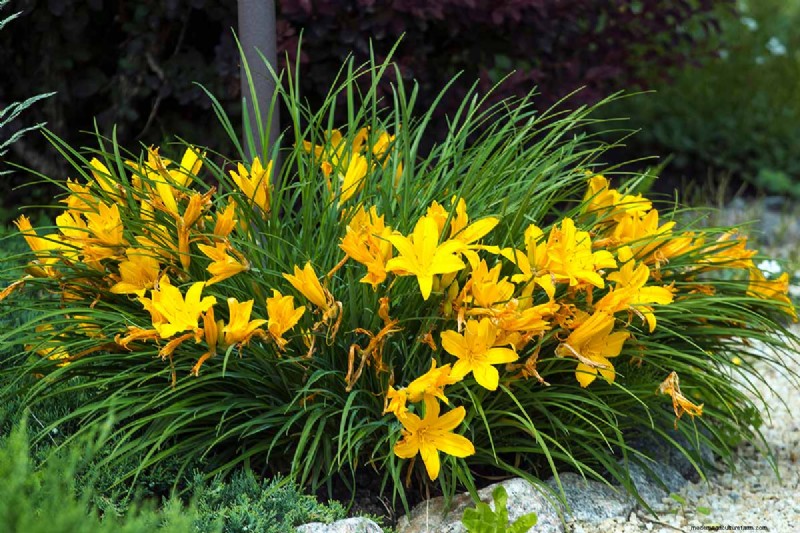
Azucena comestible.
Arranca las flores por la mañana cuando se abran. Los pétalos saben a judías verdes con miel y un toque de pimienta negra añadido.
No te comas los pistilos ni los estambres. Si bien no son venenosos, tienen una textura y un sabor desagradables.
Encurta los suculentos pétalos, úsalos como aderezo para carnes y pescados, o pícalos y agrégalos a huevos o ensaladas. Rellénalas o rebozalas y fríelas como si fuera una flor de calabaza.
Se me hace la boca agua solo de pensarlo... Sólo asegúrate de retirar suavemente los pistilos y los estambres primero.
Pero no confundas las azucenas con los lirios verdaderos (Lilium spp.) , que son venenosos! Mira las hojas para determinar cuál es cuál.
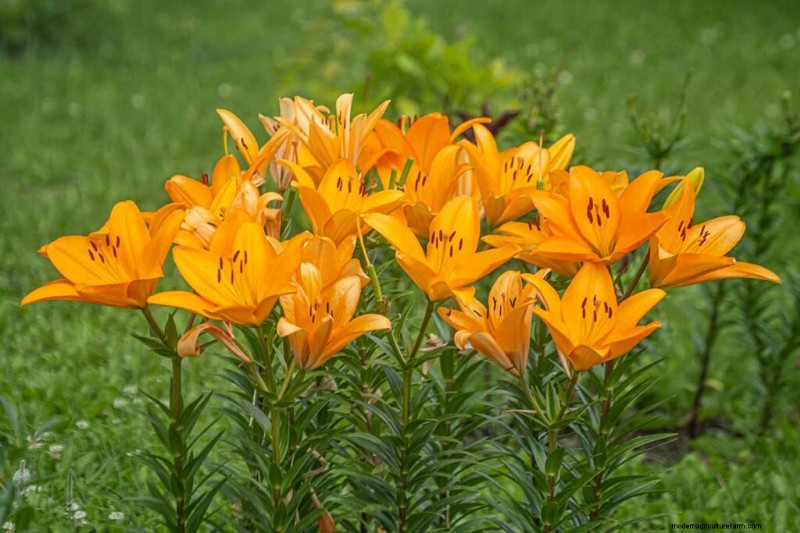
Este híbrido asiático es un verdadero lirio, y estas flores
no lo son comestible.
Las azucenas tienen hojas largas y planas que emergen de la línea del suelo. También encontrarás varios tallos en la planta. Los lirios tienen un solo tallo con una espiral de hojas que suben por el tallo.
Obtenga más información sobre las azucenas en nuestra guía .
24. Flor de saúco
Ya sea que las cultives como alimento, medicina o uso ornamental, esos racimos de flores de saúco blancas de olor celestial (Sambucus spp.) son una delicia fabulosamente dulce. Saben a uvas dulces.
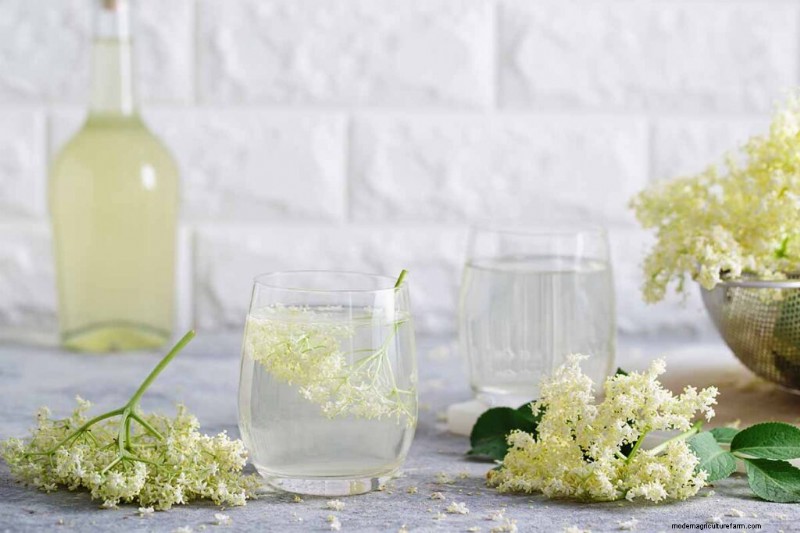
Obviamente, popularmente se convierten en vino, pero también puedes usarlos para cubrir panqueques o buñuelos, rebozarlos y freírlos, o usarlos como guarnición para pato o pollo.
Hay que tener cuidado con el momento de cosechar las flores. Si esperas demasiado, algunas de las flores de cada racimo ya estarán descoloridas y marrones, y no sabrán nada bien.
Primero, asegúrate de que todas las flores estén abiertas. Maduran empezando desde fuera y avanzando hacia el centro.
Enjuáguelos suavemente con agua fría y déjelos secar antes de usarlos. Te perderás las bayas cuando las arranques, pero la sensación de sabor vale la pena.
Consulta nuestra guía para cultivar bayas de saúco .
25. Onagra
Claro, son famosos por ese aceite medicinal, pero la onagra (Oenothera biennis ) también es completamente comestible. Come los cogollos crudos o cocidos y los pétalos crudos. También puedes comer las semillas.
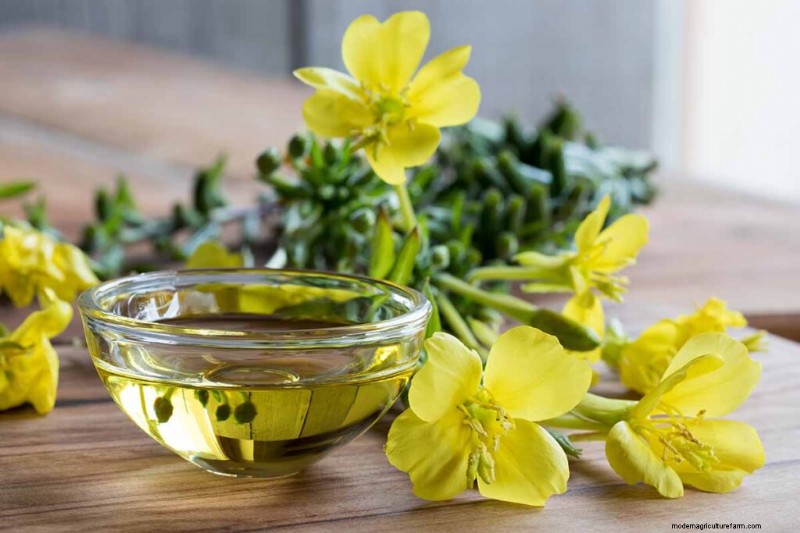
Los pétalos tienen un sabor cítrico parecido a la miel que queda mejor en platos dulces como galletas, pasteles, galletas de mantequilla y pavlovas.
Si quieres cultivar onagra en tu jardín, consulta nuestra guía .
26. Nomeolvides
Tan dulce y pequeña como la oreja de un ratón, que el género llama Myotis en griego significa:las pequeñas flores de un nomeolvides (Myotis spp.) son demasiado lindos para olvidarlos.
Si has estado bebiendo el Frappuccino Nomeolvides de Starbucks, no saben nada parecido. Las flores reales tienen una nota ligeramente floral y amarga.
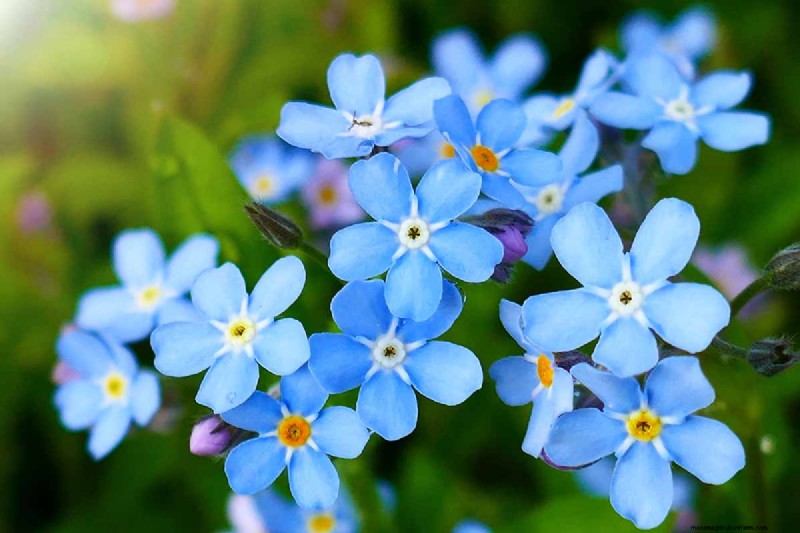
Lo mejor es confitarlos y usarlos para cubrir postres, ya que el azúcar enmascara parte del amargor.
Obtenga más información sobre los nomeolvides aquí .
27. forsitia
Quizás suspires aliviado cuando llegue la primavera y la forsitia (Forsythia spp.) ilumina el paisaje.
Lo sé, ya que significa que los tristes meses de invierno han quedado atrás. ¡Pero esos pétalos vibrantes también presagian la llegada del momento de masticar la forsitia!
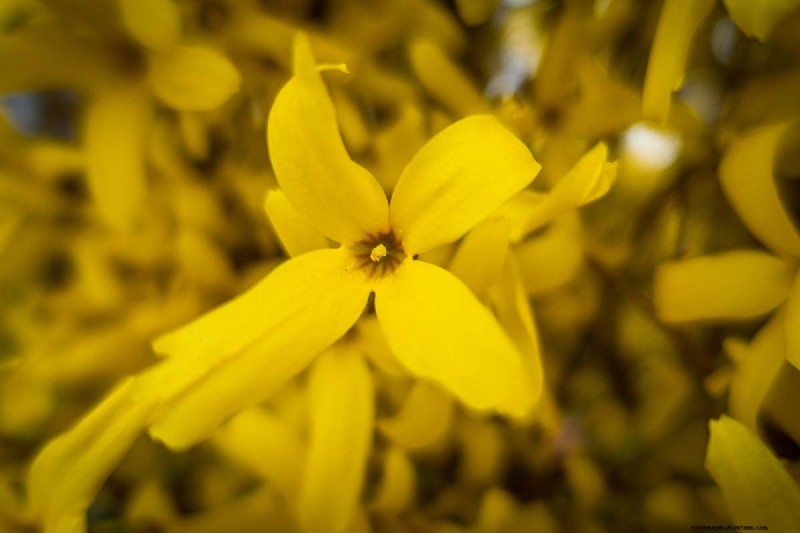
Tienen un suave sabor floral que no dominará a nada, pero el color es lo suficientemente llamativo como para compensar su suave sabor.
Úsalos para hacer almíbar, miel aromatizada, aceite infusionado, mermeladas y jaleas, o simplemente añádelos a una ensalada para darle más color.
Consulte nuestra guía sobre el cultivo de forsitia para obtener instrucciones de cultivo .
28. fucsia
Fucsias (Fucsia spp.) son algunas de las mejores flores para comer , en mi opinión. Las bayas también son fantásticas.
Incluso tenemos una guía dedicada exclusivamente a plantarlos, cosecharlos y comerlos , incluidas las mejores variedades para probar.
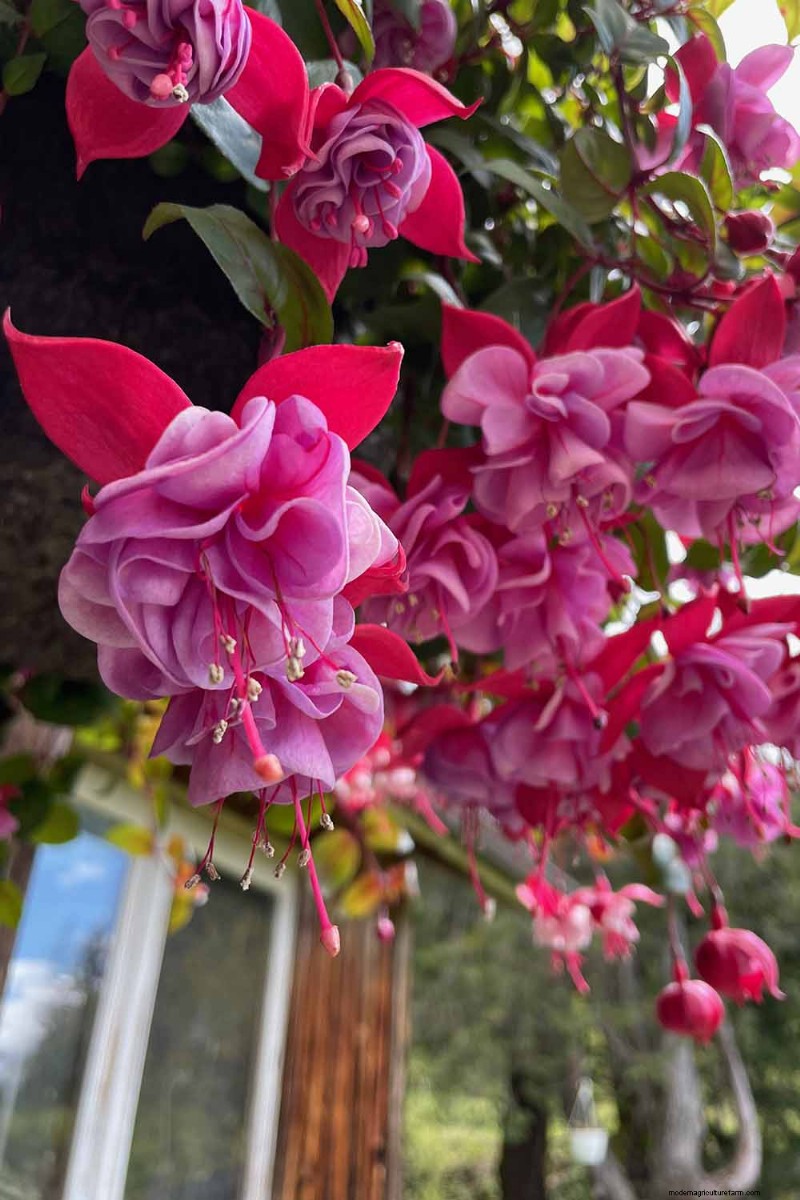
Foto de Kristine Lofgren.
Algunas especies tienen mejor sabor que otras, pero todas son comestibles y todas saben bien.
Es difícil superar estas flores como aderezo para una ensalada o sopa, añadiéndolas justo antes de servir, ya que son tan impresionantes. Utilízalos también como guarnición comestible para arroces o bebidas.
29. gardenia
Preciosas gardenias (Gardenia spp.) huelen como un pedacito de cielo y saben igual de bien.
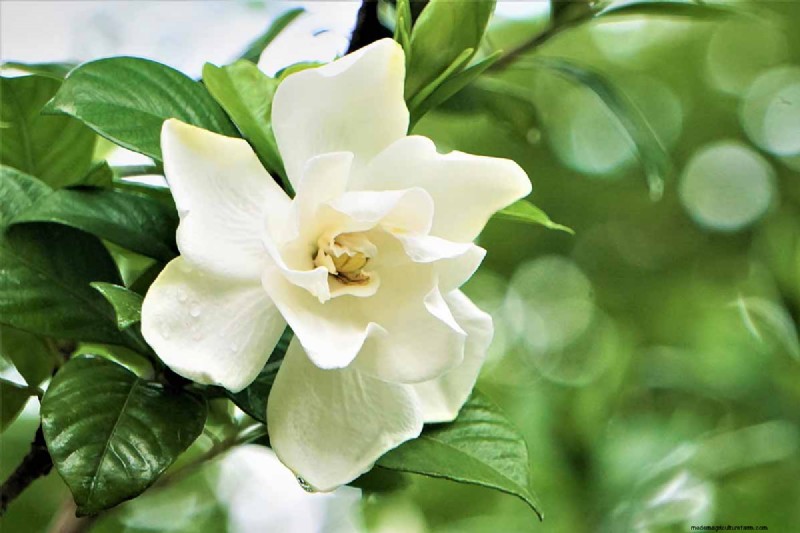
Alguna vez famosas por su uso en ramilletes y exhibiciones de bodas, las flores dulces como la miel se pueden encurtir, confitar o rebozar y freír como buñuelos.
Úselos para infundir miel, en helado, con crema batida para cubrir merengues o incluso puede agregarlos a salteados.
Obtenga más información sobre el cultivo de gardenias en nuestra guía .
30. Geranio
Geranios perfumados (Pelargonium spp.) no saben tan bien como huelen, pero definitivamente vale la pena experimentar para ver qué variedad te gusta más.
Algunas de las flores se utilizan mejor como guarnición o para añadir aroma a tu plato, mientras que otras son increíblemente deliciosas.
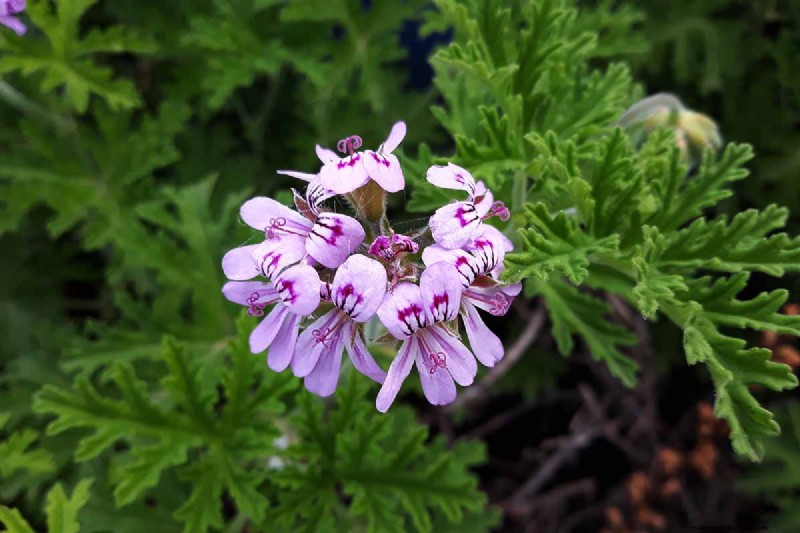
Las variedades cítricas son ganadoras en platos de pescado y carne, mientras que la variedad con aroma a rosas es deliciosa en postres.
Geranio Cranesbill (Geranium carolinianum ) are also edible, from the roots to the flowers, but these aren’t nearly as tasty as their scented cousins.
The blossoms on zonal geraniums (P. x hortorum ) are edible as well. But give them a taste before you commit to using them in a recipe, because the bitter flavor isn’t to everyone’s liking.
31. Gladiolus
Gladiolus (Gladiolus spp.) tastes a lot like romaine lettuce but these blossoms are a whole lot prettier in the garden.
This flavor profile makes them perfect for use in salads, but you could also toss them in lettuce soup or add them to sandwiches for some bold color.
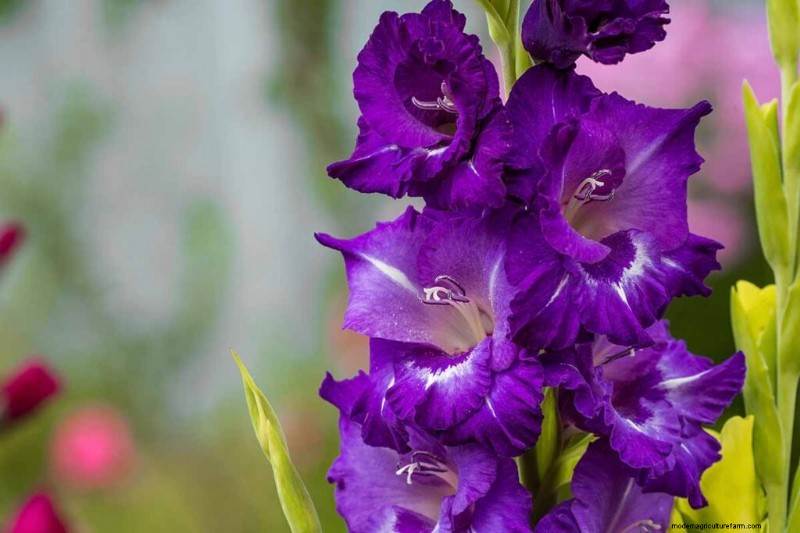
Even better, stuff them as you would squash blossoms. Try shredded chicken, tuna, egg, cheese, or anything else that strikes your fancy.
Just imagine a plate full of orange, maroon, purple, and salmon-colored gladiolus being passed around as appetizers at a party. They’re impressive.
Be extra careful to wash these flowers gently because they can become crushed or ripped quite easily.
Learn more about growing gladiolus in our guide .
32. Hawthorn
These are my least favorite to harvest of all the blossoms on this list, thanks to the tree’s gnarly thorns, but hawthorn (Crataegus spp.) flowers are quite flavorful.
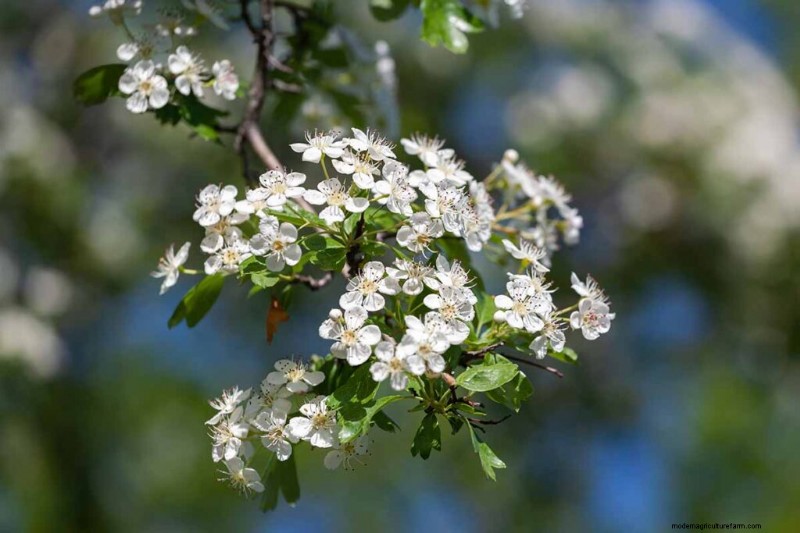
You should only eat the flower buds or the young, recently opened flowers, never the older blossoms that are turning brown.
And as just a brief aside on hawthorn fruit – don’t even think about eating the seeds inside the berries since they’re poisonous. The flesh of the berries, however, is fine to consume.
Young hawthorn flowers and buds have a similar flavor to crabapple blossoms, which are lightly floral.
Learn more about hawthorn care here .
33. Hibiscus
One of the few flowers that can stand up to cooking, Hawaiian hibiscus, also known as rose mallow or Hibiscus rosa-sinensis , has a tart flavor that is oh-so-refreshing.
If you’ve ever had Jamaica tea then you know what I’m talking about.
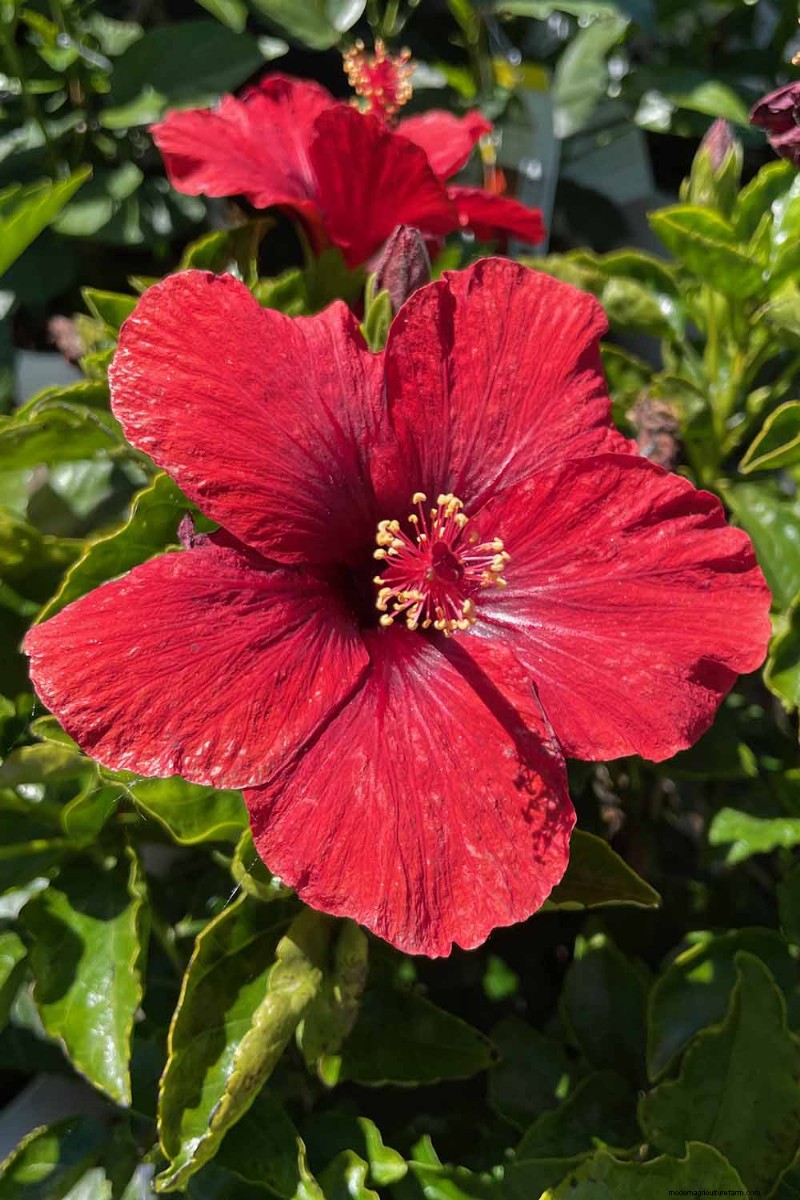
Photo by Kristine Lofgren.
All perennial hibiscus species are edible, but H. rosa-sinensis and H. sabdariffa are the best tasting.
Cook them in quesadillas, enchiladas, or taquitos, toss them in salads and cocktails, bake them into tarts and pies, or make them into jam.
Our guides provide cultivation instructions for hardy hibiscus and tropical hibiscus .
34. Hollyhock
Hollyhocks (Alcea spp.) have been around for an extremely long time, and they’re one of the earliest recorded cultivated flowers.
People in their native Asia and Europe munched on them and used them as ornamentals in the garden simultaneously.
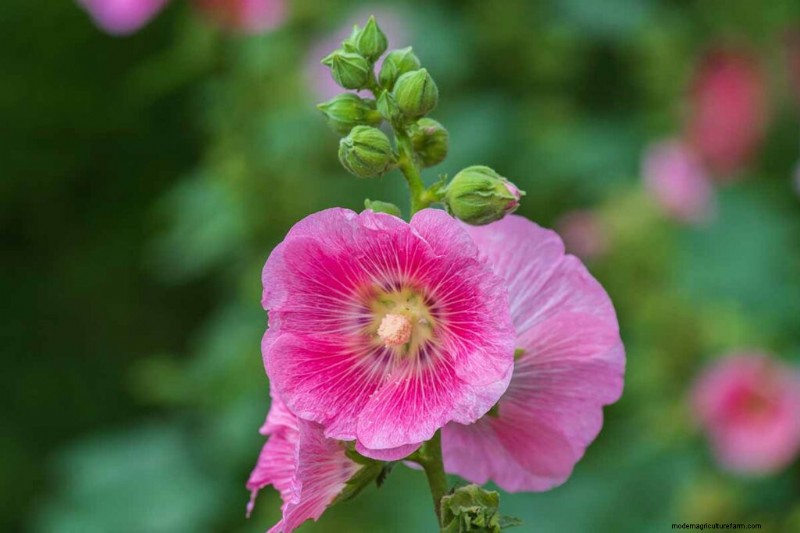
Remove the seedy center and use them on salads, in cocktails, on desserts, or to garnish a cheese plate.
Learn more about hollyhocks in our growing guide .
35. Honeysuckle
If you ever sucked on the ends of honeysuckle blossoms (Lonicera spp.) when you were a kid, then you know just what you’re in for.
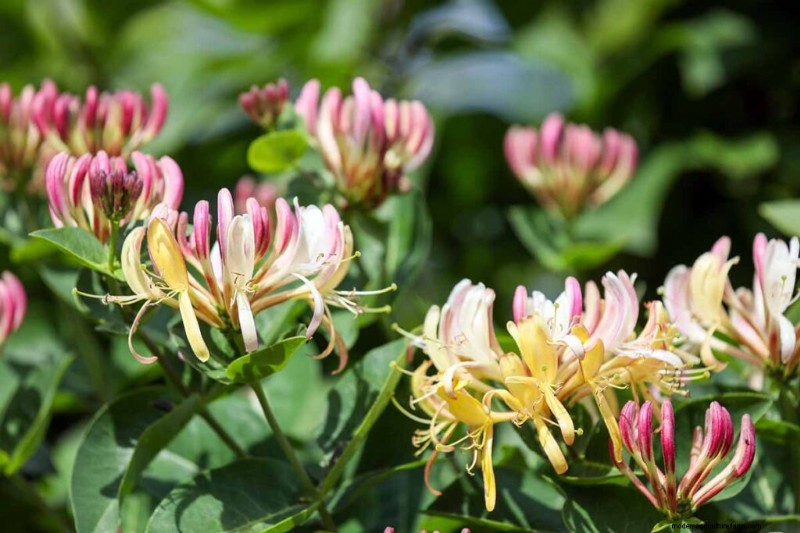
Photo by Kristine Lofgren.
Honeysuckle is sweet, floral, and yes, similar to honey in flavor. The flowers are wonderful for infusing tea or honey, and tossed on desserts or into salads.
Consult our growing guide to learn how to cultivate honeysuckle .
36. Hosta
A lot of people don’t realize how beautiful hosta (Hosta spp.) flowers can be , and even more people don’t know that they’re edible – as are the young shoots of the plant.
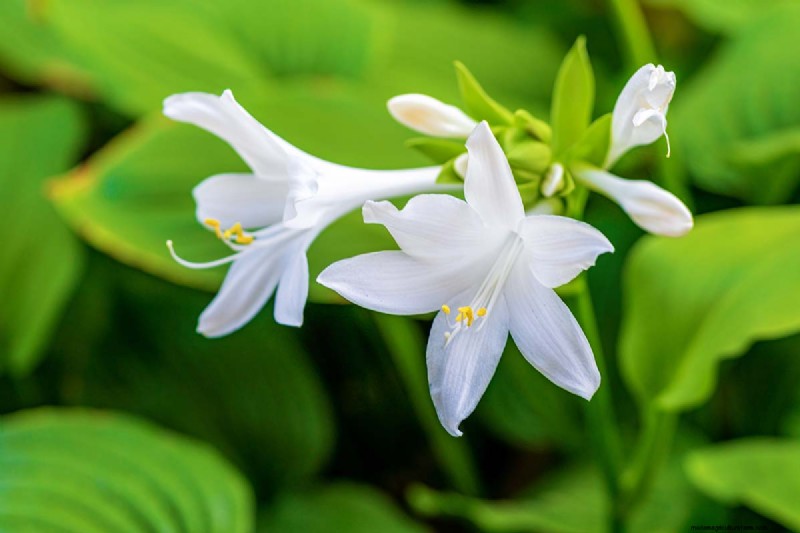
I wouldn’t say that they’re worth cultivating solely for the edible flowers, however, since they’re pretty mild. But they’re not at all bitter, and they have a subtly sweet, floral flavor.
Learn more about cultivating hostas here .
37. Impatiens
Impatiens walleriana are a standard in shady garden spots, but they should also be more popular in the kitchen.
Flowers of this species are most commonly referred to simply as impatiens, or sometimes as busy Lizzies.
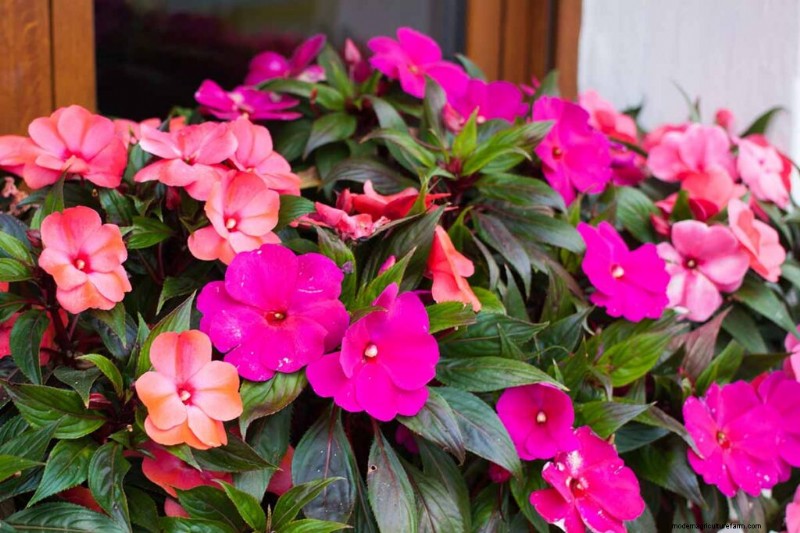
The petals are surprisingly sweet and crisp. They’re just perfect for cocktails, desserts, salads, and sandwiches.
Don’t eat any other Impatiens species.
Some, like jewelweed , are edible but should only be consumed if they’ve been cooked. It’s easier to just stick with the good old garden classic we know and love for this genus.
Learn about how to grow impatiens here .
38. Jasmine
There are lots of different types of jasmine out there but only Arabian jasmine (Jasminum sambac ) is edible.
Every other species is poisonous, so you have to be absolutely, 100 percent sure that you’ve got the right one.
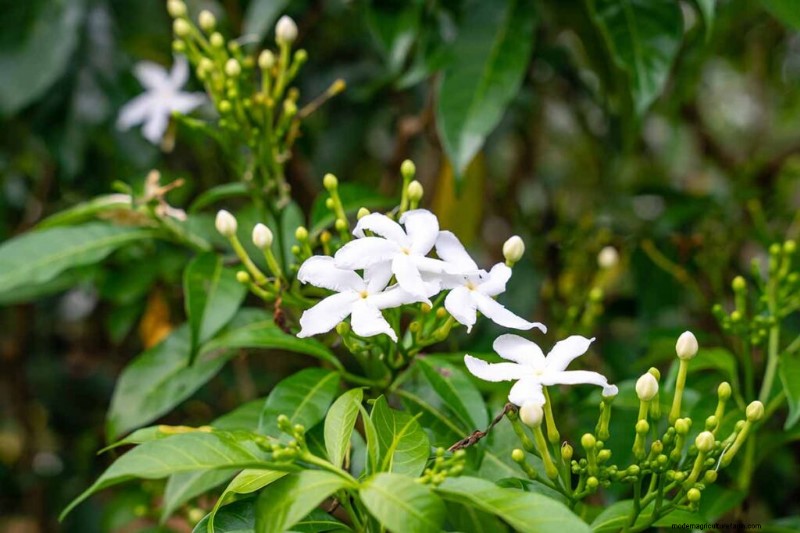
So long as you have the correct plant, you can enjoy the pungent blossoms sparingly as a garnish, or in syrups or cocktails.
The flowers are pungent and they can overpower your senses.
Check out our guide to growing jasmine to learn more.
39. Lavender
I’ll warn you in advance, lavender (Lavandula spp.) should also be used sparingly. It isn’t bad for you, but the flavor is bold.
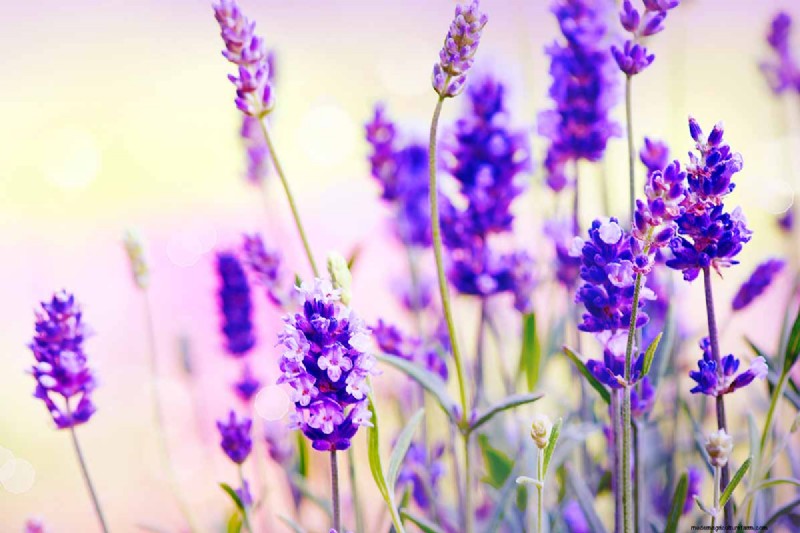
You know that pungently floral, spicy fragrance of the flowers? They taste just like that. That’s why so many people prefer them candied, since the sweetness cuts down on the spice.
Lavender tea is marvelous, and as many people already know, the candied flowers are an edible floral staple.
But be a little more creative! Use lavender in cocktails, fruit salads, and on desserts, to make jams and jellies, or in pies.
Then, try the blooms rubbed onto beef as part of a spice blend, chopped finely and added to a sauce for lamb, or tucked in around a roasted chicken before serving.
Our guide to growing lavender provides full cultivation instructions.
40. Lemon Verbena
You already know that you can eat the leaves of lemon verbena (Aloysia citradora ), but the blossoms taste just as good, if not better.
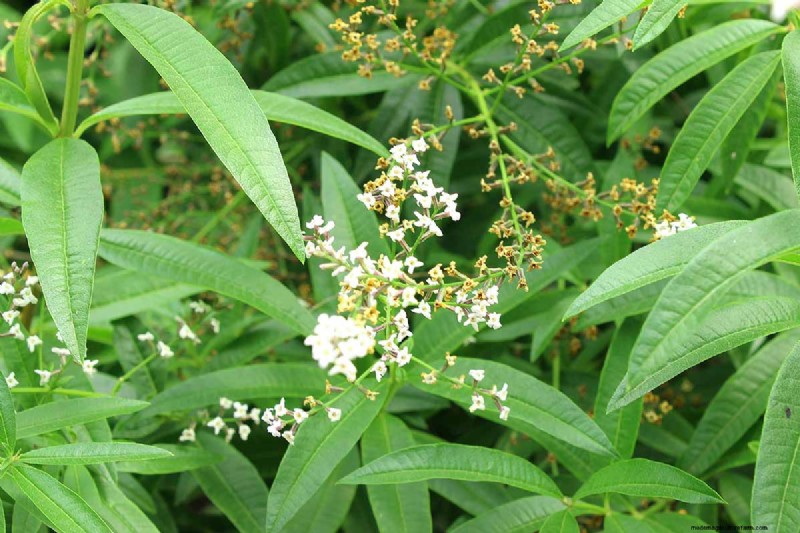
They have a similar flavor with an added floral hint. Use them liberally in cocktails and desserts.
Learn more about lemon verbena here .
41. Lilac
Lilacs (Syringa spp.) taste just like they smell:pungently floral and sweet.
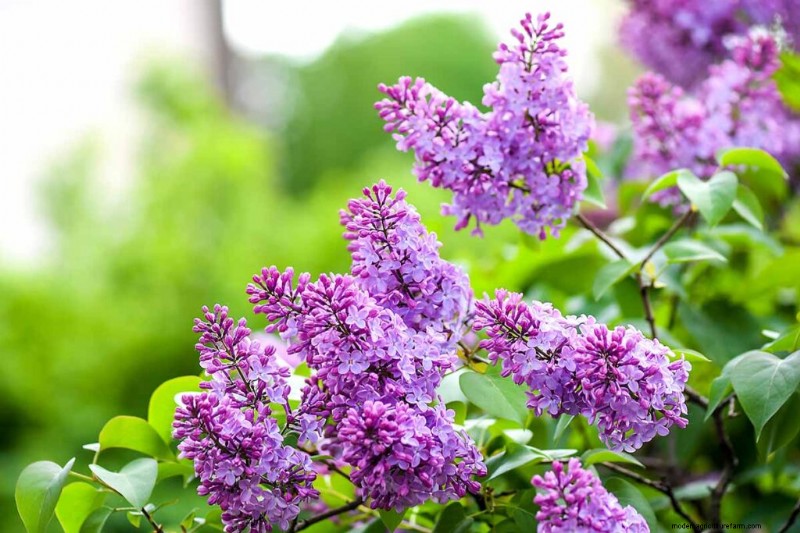
Every spring, I stuff lilac blossoms into a mix of equal parts sugar and water, and cover it with a cotton cloth.
Then, I agitate the mixture every day for a few days. Next, I strain the liquid and seal it with a lid.
After a few days, the yeast on the flowers causes the liquid to ferment. Voila, you have a naturally fizzy drink with a marvelous flavor!
You can also candy these flowers or use them on desserts.
Learn more about lilacs in our growing guide .
42. Linden
Gardeners seem to have a love-hate relationship with linden trees (Tilia especies). They can be messy, but my goodness, the flowers smell incredible! And you can eat them, too.
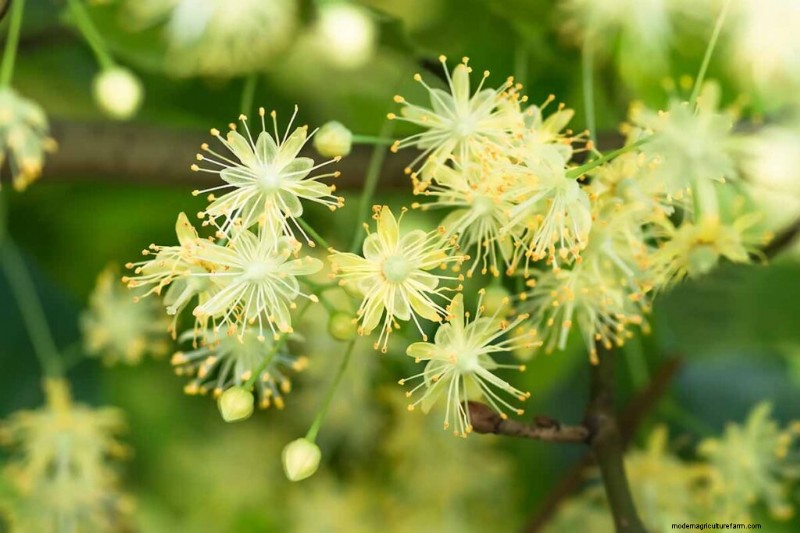
Gather them soon after they open, before they start to turn brown. Use them to garnish desserts or cocktails.
Learn more about growing linden trees here .
43. Lotus and Water Lily
These close relatives look and taste very similar. Many people eat the roots of lotuses (Nelumbo spp.) and water lilies (Nymphaeaceae family), but the flowers are edible as well.
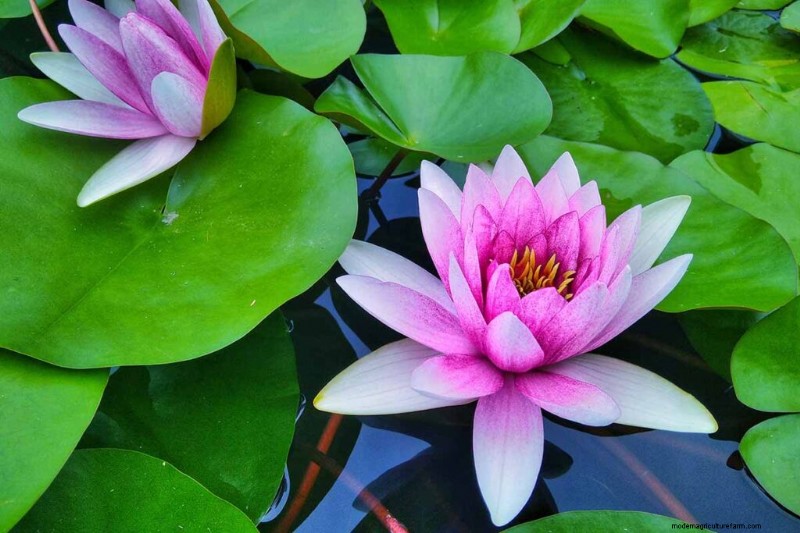
Remove the sepals and stamen and then stuff the honeydew-flavored flower with anything your heart desires, like cream cheese, dip, or pickled veggies.
You can batter and fry them, chop them to add to soups and salads, or just use them as a garnish.
44. Magnolia
Magnolia blossoms (Magnolia spp.) are edible, but there’s a lot of debate about which type tastes best.
Some people swear the ones with pink petals are the way to go, while others say the magenta and white ones are superior.
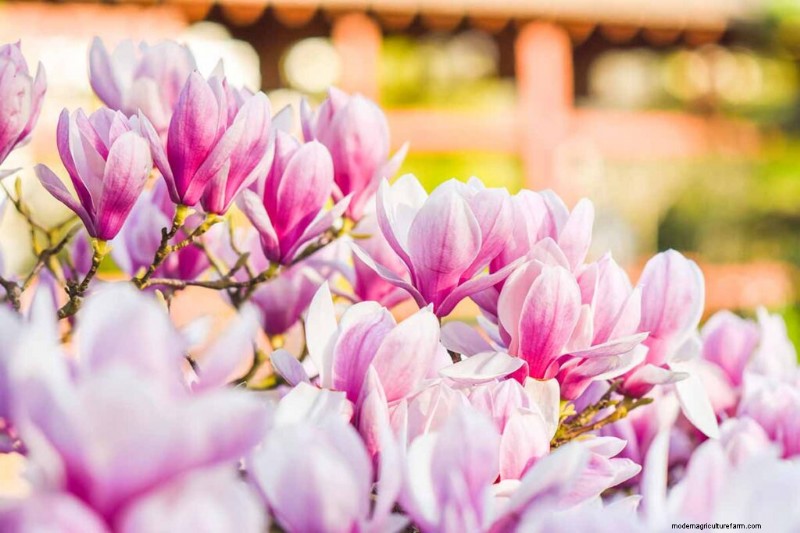
I say, just take a nibble of whatever you have access to and decide if it’s for you or not.
The darker the color, the more bitter the flavor becomes. White is more citrusy, and pink has hints of cardamom.
The petals are excellent pickled and can be used to replace pickled ginger, since the blossoms also have a ginger-like flavor.
Check out our guide to growing magnolia to learn more.
45. Mallow
Mallow (Malva spp.) is a unique addition to the kitchen in that we don’t usually eat these plants for their flavor, but for the texture they provide.
You can add the mucilaginous leaves to soups as a thickener.
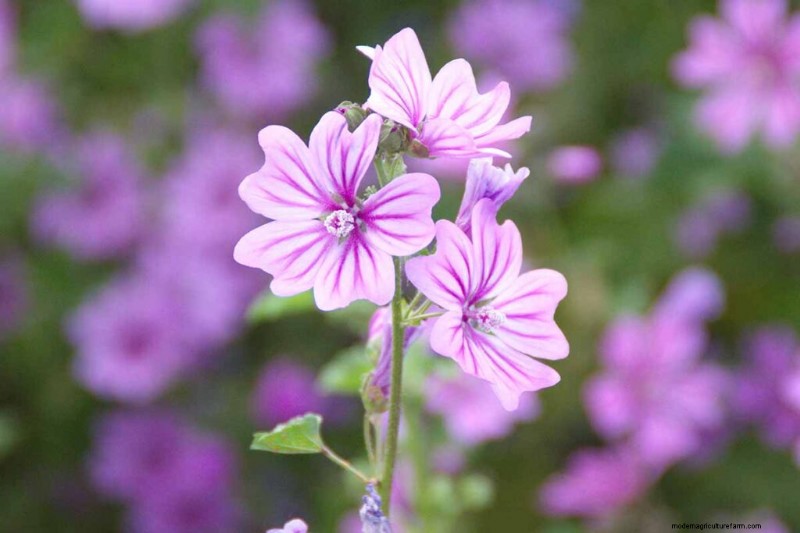
The petals are also flavorful either cooked or raw, but test out the texture first before you go all in.
The viscous mouthfeel can be off-putting to some people, but the mild flavor makes this flower ideal when you want something similar to tofu that will absorb any flavor you pair with it.
Use it anywhere you would use okra, in soups, salads, or stir-fries.
46. Marigolds
Of all the species on this list, marigolds (Tagetes spp.) might be the most versatile.
The petals are perfect in breads, rice, stews, soups, cakes, and drinks, as well as egg, fish, chicken, beef, or veggie dishes.
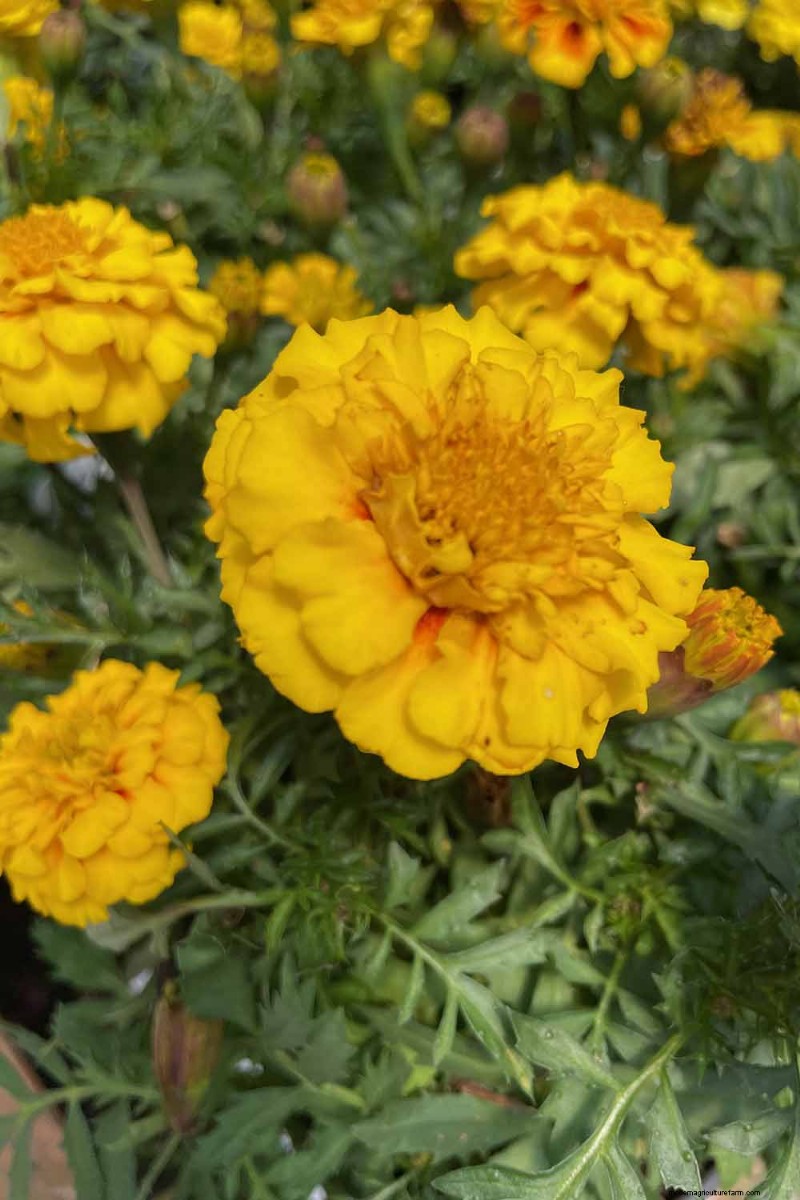
Photo by Kristine Lofgren.
They can be pickled with vegetables, added to compound butter, and used to garnish cocktails. And don’t forget their appeal in sandwiches, fish salads, and custards!
The dried leaves can also be used as a saffron substitute to add color to cooked dishes.
We have a whole guide available to help you use and enjoy these classic beauties .
And to learn how to grow marigolds, check out our guide .
47. Mint
We all know that mint leaves (Mentha spp.) are incredible, but how often do we actually eat the flowers?
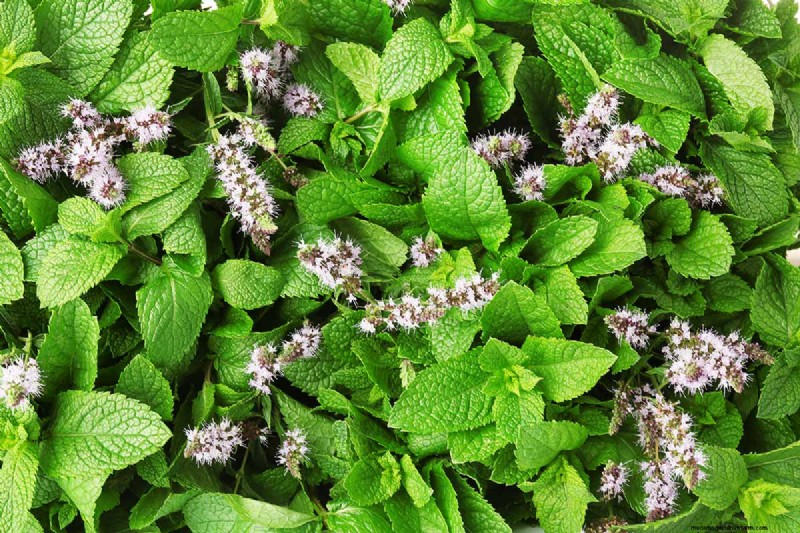
Not often enough, I say! Use them anywhere you’d use mint. They have a similar flavor with a hint of floral goodness that I think makes them taste even better than the famous leaves.
They’re a bit of a pain to prepare since you have to carefully pop each flower off of the stem individually, but once you have a small handful, you have a game-changing ingredient available to garnish drinks, desserts, salads, and soup.
Seriously, try a palmful on a bowl of cucumber and milk or yogurt soup and tell me it didn’t blow your mind. Our sister site Foodal has a recipe worth checking out.
You always read in gardening guides about how you should trim any flowers off of your mint plants, but I say save them and put them to work in the kitchen!
Learn more about growing mint in your herb garden here .
48. Nasturtium
If watercress and honey had a baby, it would be nasturtium (Tropaeolum spp.).
And that’s not a surprise, given that this plant was once considered a type of cress until Linnaeus reclassified it in the eighteenth century.
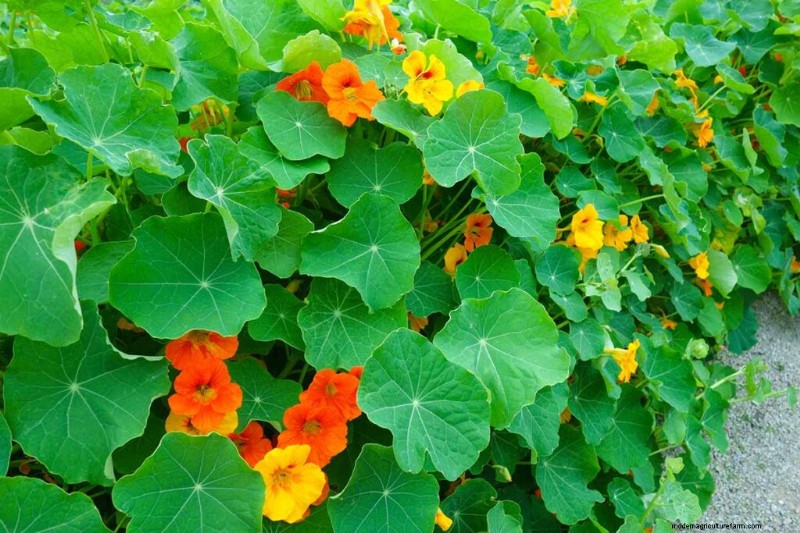
These flowers should be eaten fresh, and they don’t dry well. They also don’t cook well and taste bitter once they start to wilt.
For that reason, add them to warm dishes like omelets, quiche, fish, veggies, and soups immediately before serving.
Otherwise, use them in cool dishes like salads, sandwiches, and desserts.
Broccoli and brussels sprouts become much more interesting when drizzled with melted butter infused with nasturtium blossoms.
Add the blossoms to the jar when pickling veggies, use them as tiny lettuce-like wraps, or make a pesto.
Find more ideas and tips in our guide to eating nasturtiums , and if you need growing info, you can find it here .
49. Orchid
Orchids can be a little hit and miss when it comes to edibility, and there are many varieties out there. But if you stick with Dendrobium species, you’ll be in good shape.
These are the ones you can often find packaged at stores and sold for use in cooking. The flowers are firm and crisp with a flavor similar to endive .
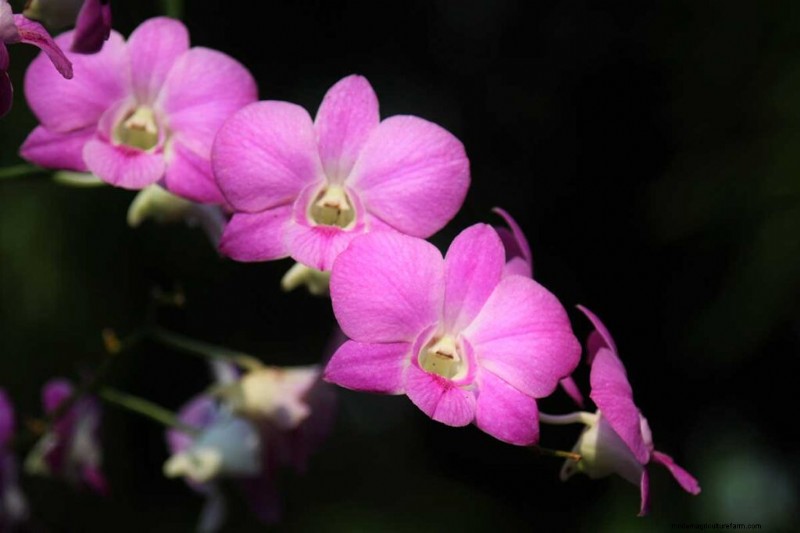
They’re a hit battered and fried, but they’re also lovely in cocktails, in salads, or dipped in sugar for a sweet treat.
Want to learn more about orchids? Our guide has you covered .
50. Pansy
Most pansies (Viola tricolor var. hortensis ) don’t have much flavor on their own. They’re best candied, or simply used as eye candy.
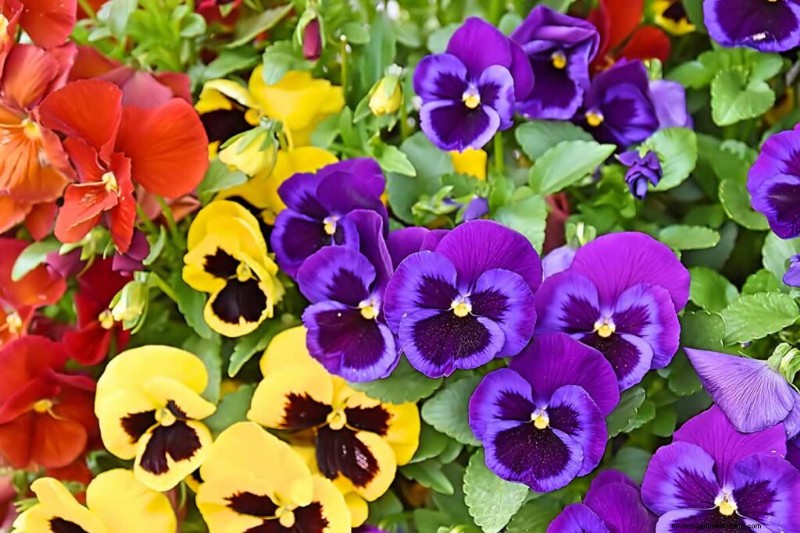
I think this is a shame, because they used to be much more flavorful than they are now.
Breeders have been focused on making prettier blossoms rather than tastier ones, but don’t let that stop you from using them in your desserts or salads if more for the color than anything else.
Though it’s mostly concentrated in the edible leaves and stems, if you hunt down Viola x wittrockiana , this hybrid still has the wintergreen flavor that makes violas real winners as edible blossoms.
It comes from methyl salicylate in the plant. If you pull the petals and just use them, they’ll have more of a mild, grassy flavor.
You can learn how to grow pansies here .
51. Passionflower
Passionflowers (Passiflora spp.) are so funky and alien-looking that you might be a little nervous to chomp down on one, but don’t be timid.
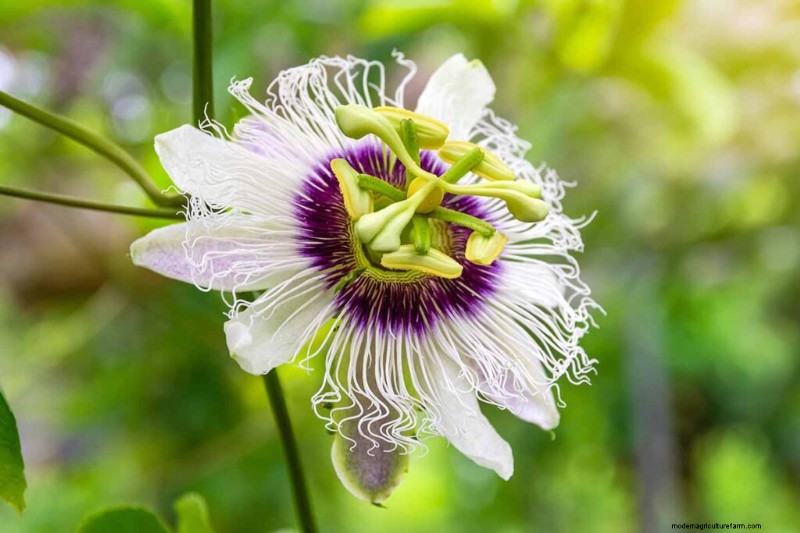
The petals have a tart, sweet flavor and are beloved in tea, both iced and hot.
You can also use the petals to make a cordial as described above for lilacs, or chop them to use on desserts.
Learn how to grow passionflower here .
52. Peas and Beans
Flowers from any type of edible pea plant (Pisum sativum ) can be consumed, as well as some types of ornamental peas like blue butterfly (Clitoria ternatea ).
True pea flowers taste a lot like… wait for it… peas! Blue butterfly pea has a distinctly chamomile-like flavor.
Blue butterfly blossoms are intensely blue, but if you mix them with an acid like lemon or vinegar, they turn the solution purple. You can use it to color or add flavor to dishes or cocktails.
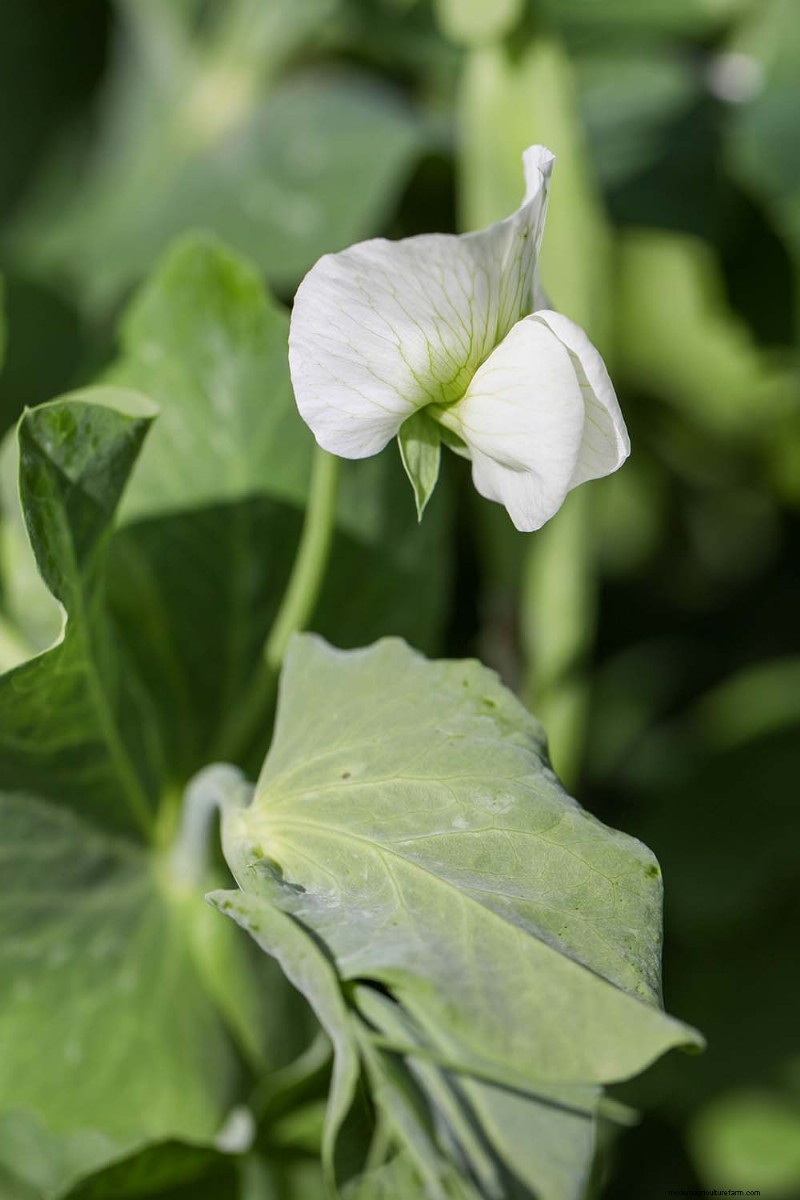
Photo by Kristine Lofgren.
Toss true pea blossoms into any dish that you’d use peas in, from stir-fries and soups to salads and sandwiches.
Similarly, bean and some other types of legume flowers from the Phaseolus , Lens , Cicer , and Glycine genera have a distinctly beany flavor.
I think Great Northern and lima bean flowers are particularly delicious, and beans produce blooms in a variety of colors from white to pink to red to purple.
Don’t eat ornamental bean or pea flowers like sweet peas (Lathyrus odoratus ) – the blooms as well as the pods and seeds produced by these plants are poisonous.
Mung beans in the Vigna genus should also be avoided.
53. Peony
If peonies (Paeonia spp.) merely looked lovely, they’d still be well worth growing in the garden. But they also happen to be edible and they’re delicious .
Depending on the variety, they may have a sweet, fruity, or slightly spicy flavor.
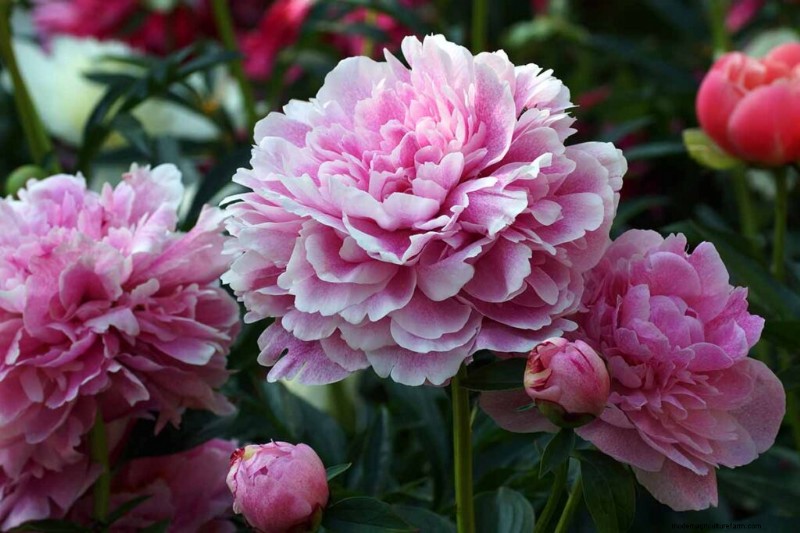
You can cook them, though they’re better blanched rather than thoroughly cooked, and they may also be consumed raw.
Sweeter types are best in desserts and cocktails, while spicier types are fantastic in salads and tossed as a garnish on soups.
Check out our guide to learn how to grow peonies .
54. Phlox
Don’t confuse the edible variety here with creeping phlox . Only the tall perennial species also known as garden phlox or fall phlox (Phlox paniculata ) is edible.
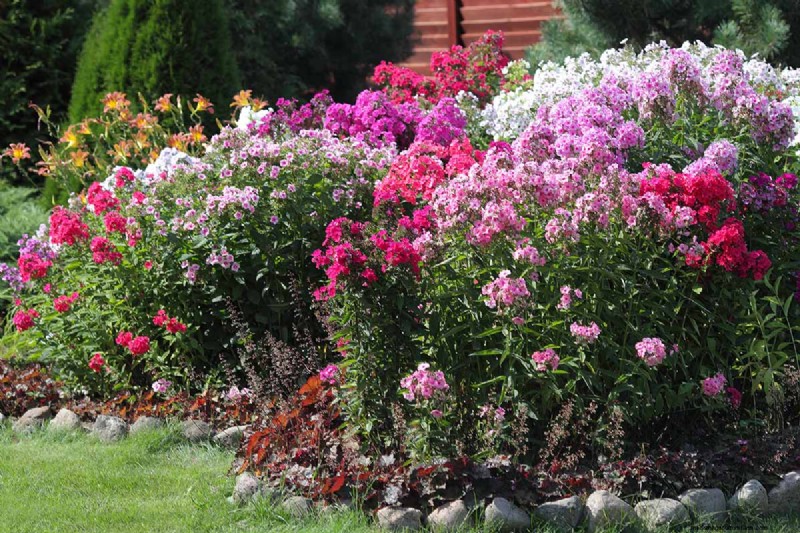
The flowers are sweet with a spicy bite and they are best used fresh in salads or on sandwiches.
55. Pommes and Stone Fruits
Crabapple and apple (Malus spp.) , pear (Pyrus spp.) , peach , cherry , and plum (Prunus spp.) , you name it. They’re all edible and most of their blooms taste great.
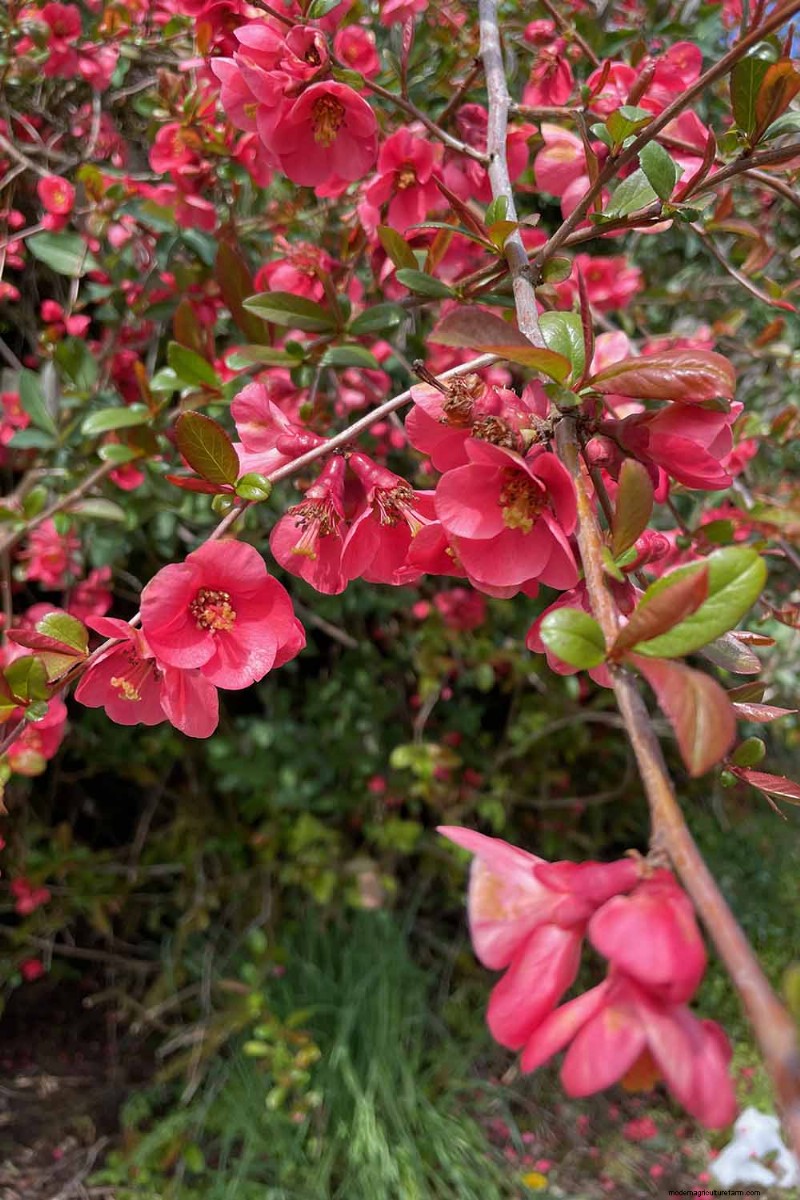
Photo by Kristine Lofgren.
Apples are the most cherished because they have the sweetest, most floral flavor, reminiscent of honeysuckle.
And quince (Cydonia oblonga ) blossoms taste nothing like the cooked fruits you may have tried. They’re tart and astringent, like the raw fruits, but still delicious.
Reserve flowers from these types of fruit trees and shrubs for sweet dishes such as fruit salads, desserts, and candying.
Make sure to trim away any woody bits, the calyx, and the stamens. You only want to use the petals.
56. Primrose
Welcoming the spring with their cheery blossoms, primroses (Primula vulgaris ) are famously fragrant and decorative, but it’s still kind of a secret that they’re also delicious.
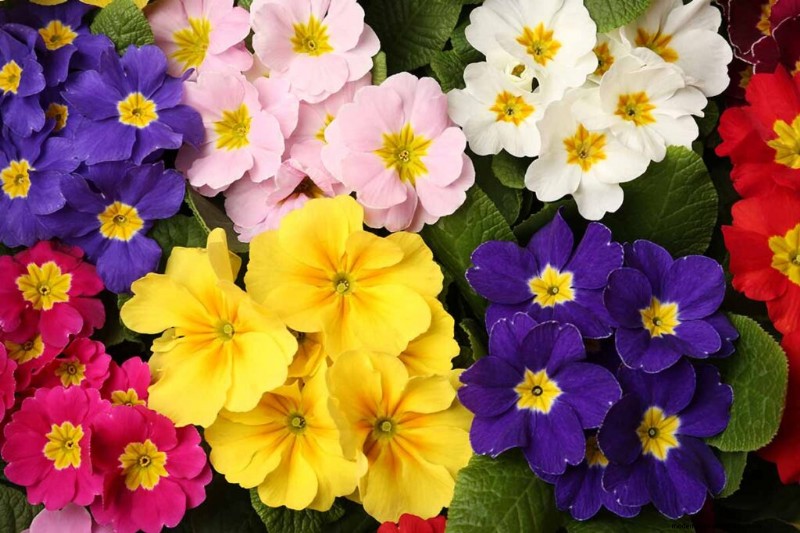
Some have a pleasantly mild flavor, similar to spinach. Others have a touch more bitterness and spice, sort of like arugula .
They can be used either raw or cooked in savory and sweet recipes.
I think their pale yellow coloring makes them ideal as a salad or soup garnish or to top rice dishes. You’ll also see some varieties in white or pink.
57. Rose
The hips are popular in cosmetics or for making tea and who hasn’t enjoyed catching a whiff of a rose-scented perfume, candle, or lotion?
We know roses (Rosa spp.) are pretty and they smell good , but we should really be chowing down on those petals more often. Depending on the type, they’re usually delicious!
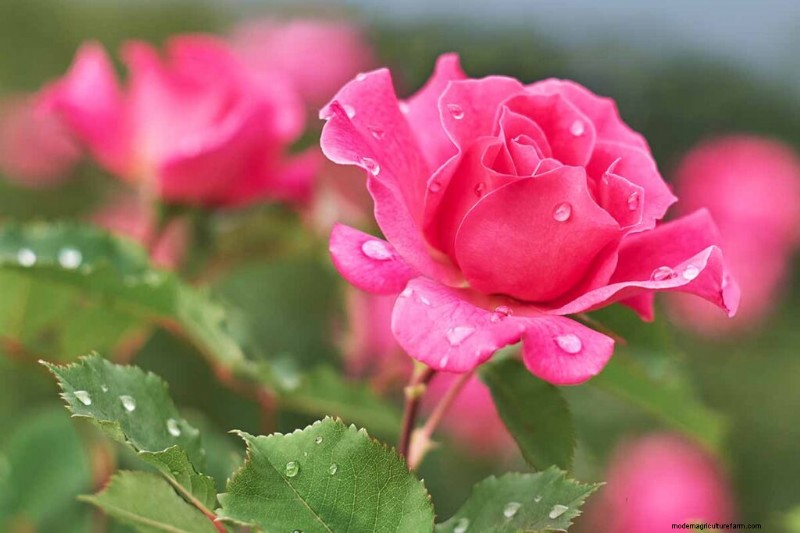
Rose water, rose syrup, and rose tea are pretty well-known options. But you can also make rose vinegar, compound butter, jellies, and jams.
Or toss the petals in cocktails, chicken or fish dishes, lamb curry, sandwiches, custards, cookies, cakes, and pies.
You can even pickle them with or without other veggies, and you can dry them to use like any other herb in your cooking.
Want to try a heavenly treat? Try the rosewater cardamom lassi recipe from our sister site Foodal .
Before you start eating your way through the rose garden, give the rose you’ve set your eyes on a sniff.
If you don’t like the scent, you probably won’t like the flavor – our senses of smell and taste are totally intertwined.
This applies especially to musk-scented roses in particular. Some people just can’t stand them.
The more fragrant the rose, the stronger the flavor will be. Darker ones and older varieties tend to be more flavorful.
With the exception of David Austin roses , newer creations like Knock Outs and Drifts tend to have no flavor at all.
Wash the roses by rinsing them under a gentle stream of cool water or swishing them in a bowl of cool water, and then pull the petals off with your fingers, leaving the calyx behind.
Snip off the white heels and let the petals dry completely on a clean towel before use.
Learn more about growing roses here .
58. Rosemary
Rosemary (Salvia rosmarinus ) flowers add a spicy, resinous flavor that is slightly more subtle than the leaves to dishes.
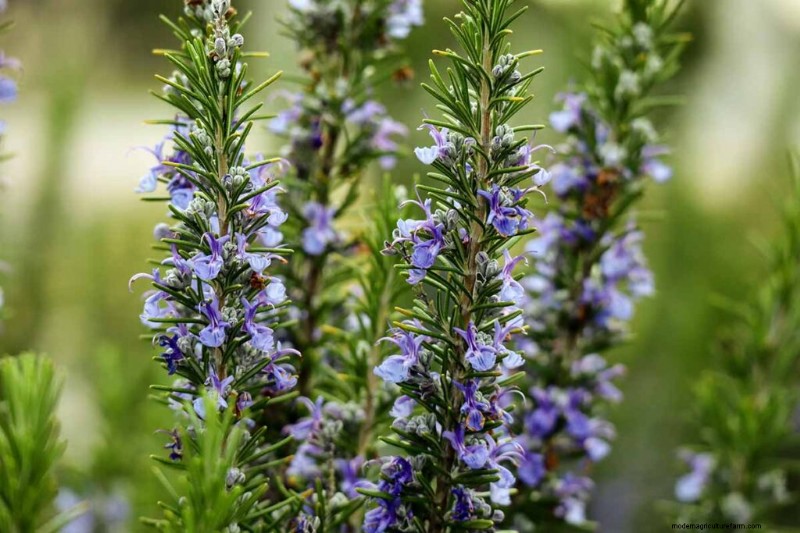
You can candy them for a pungently sweet bite or use them fresh anywhere you’d use rosemary.
In fact, I have friends that don’t like rosemary (I know, I’m not sure how we remain friends), but they love the flowers.
They‘re just mild and different enough that their taste might win some people over.
You can learn how to grow rosemary here .
59. Snapdragon
Yep, this adorable cottage garden favorite (Antirrhinum spp.) is edible.
Snapdragons can be a touch bitter, but don’t let that turn you off. Radicchio is bitter and it’s a gourmet staple!
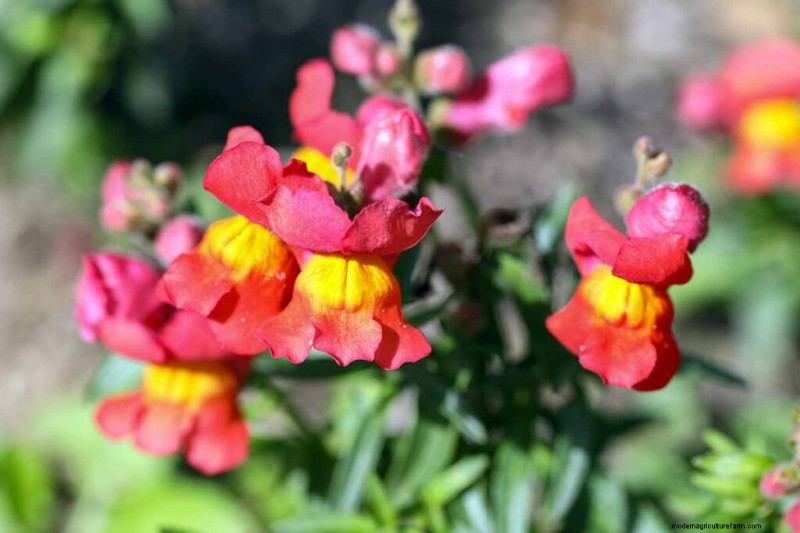
Photo by Kristine Lofgren.
If you haven’t checked out our guide to snapdragon edibility, read it now .
And you will find cultivation instructions here .
60. Squash and Other Cucurbits
Most of us have had stuffed squash blossoms before, or we’re at least familiar with them already.
You can also batter and fry them, add them to soup, salad, or egg dishes, or even use them to top chicken or pork.
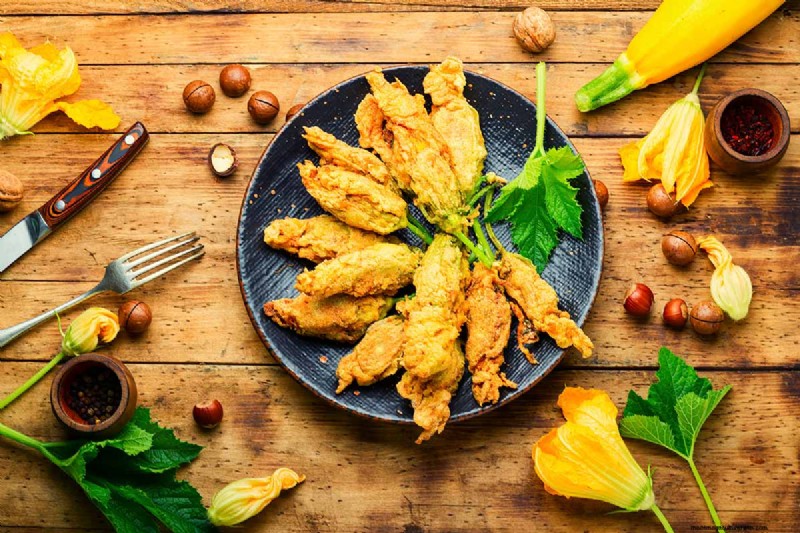
Many gardeners reference squash blossoms specifically, but you can also eat the blooms of other types of Cucurbits like cucumbers and melons, as well.
Zucchini blossoms are a classic choice for a reason, though – they are large and sturdy but not tough, with a mild floral zucchini flavor.
Melon flowers have a slight melon flavor, and winter squash blossoms tend to be a bit nuttier, though they’re still mild.
It’s best to pick male flowers, because the female flowers are the ones that turn into fruits. Males have much shorter parts while the female has longer parts at the center.
The stem behind the male flower is straight and the female stem will be more bulbous, since it’s actually the part that will develop into the fruit after it’s pollinated.
61. Sunflower
Sure, you know that the seeds are tasty, but annual sunflowers (Helianthus annuus ) are actually edible from root to tip.
You can harvest the petals for eating by plucking them away from the head.
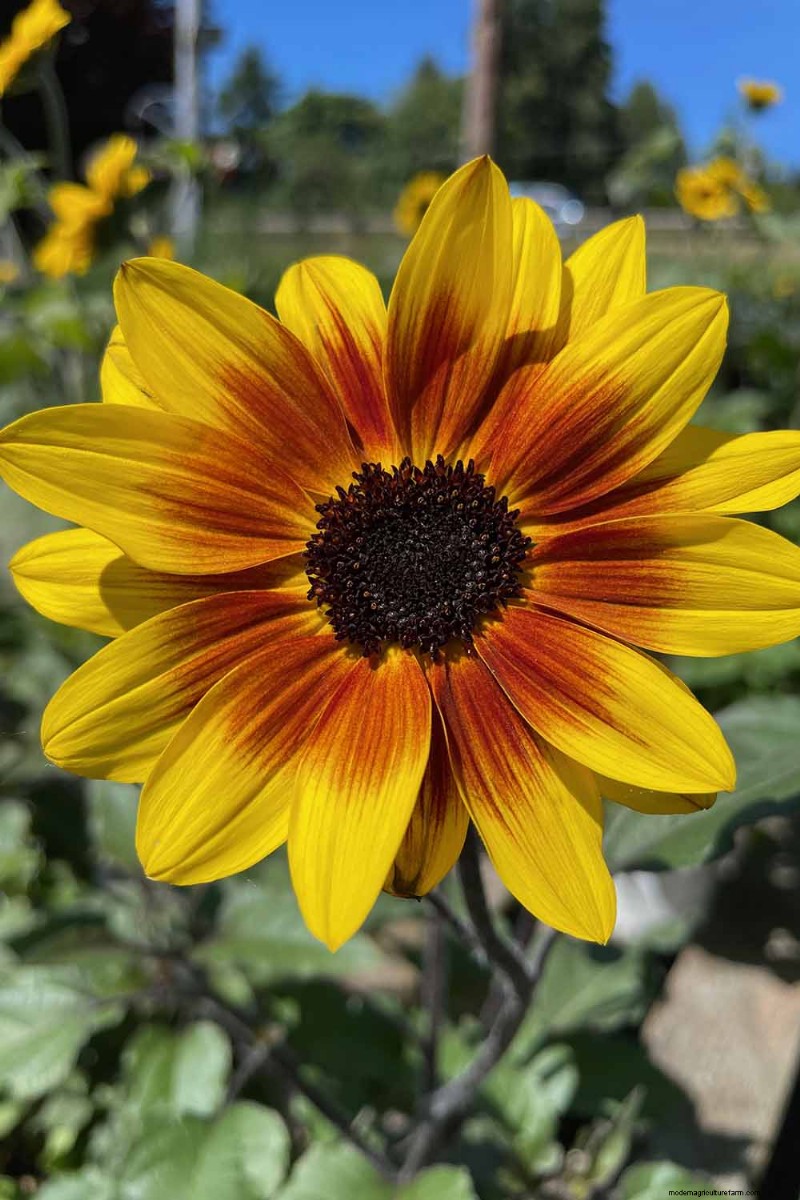
Photo by Kristine Lofgren.
The flowers have a nutty, floral flavor that fits right into pastas, salads, meat dishes, and soups. Whenever a recipe calls for sunflower oil, I add a few petals, just for fun.
Find out how to grow sunflowers here .
62. Sweet Alyssum
Lobularia maritima , commonly known as sweet alyssum, comes in clusters of white, yellow, pink, or purple four-petalled flowers.
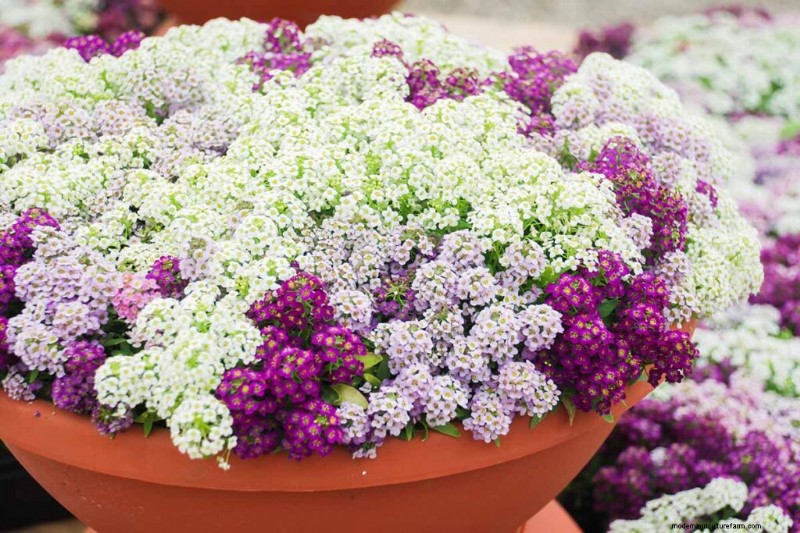
This lovely garden staple is a member of the Brassicaceae family, so it shouldn’t come as a surprise that it’s delicious. It has a sweet, peppery flavor.
In addition to making an excellent garnish, it can be used in soups, salads, and desserts.
This species is not to be confused with mountain alyssum (Alyssum montanum ), which is also technically edible but not tasty.
Learn how to grow sweet alyssum here .
63. Sweet William
Don’t ask me why you constantly see nasturtiums and violets being sold as edible flowers, but you rarely see sweet williams (Dianthus barbatus ) marketed this way in grocery stores.
Sure, you’re likely to come across bouquets of carnations to add to a vase, and these may be edible if they’re not treated with anything. But shoppers are really missing out!
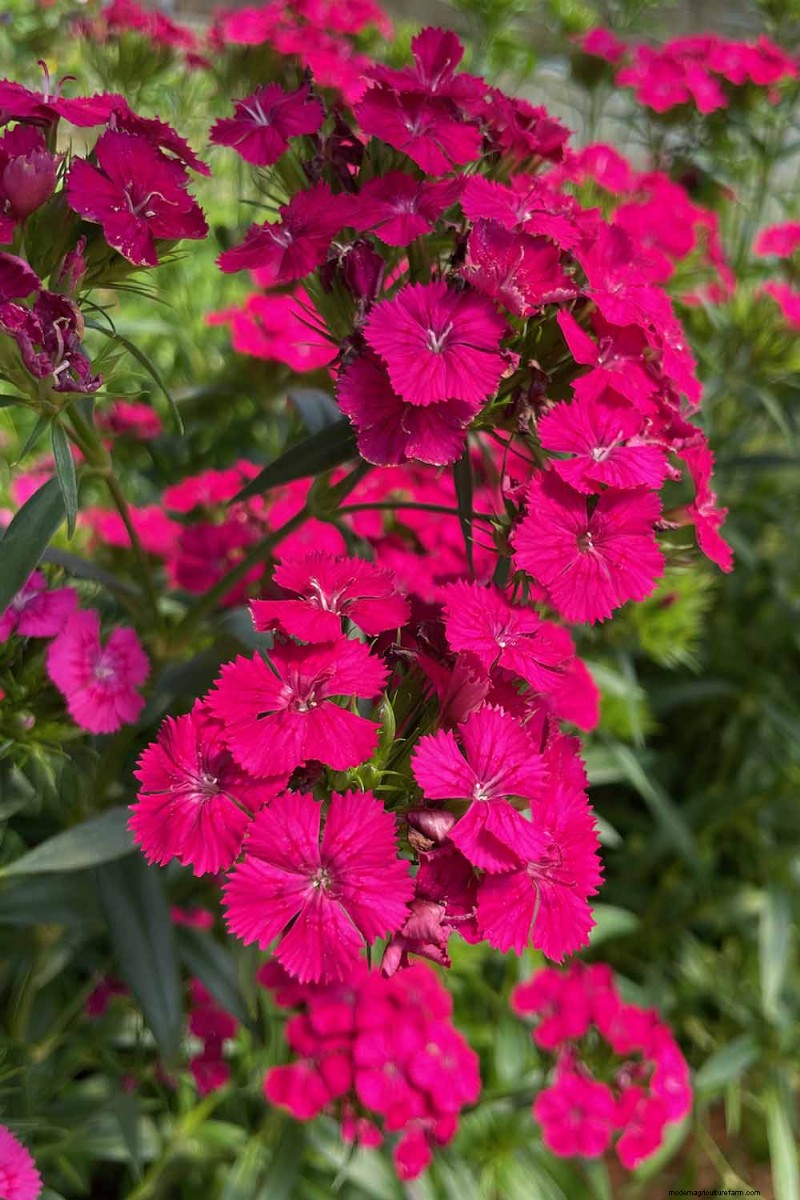
Photo by Kristine Lofgren.
Flowers from this genus are some of the tastiest out there. Maybe we need to start a campaign.
Sweet williams have a spicy, sweet flavor that works well in sweet and savory dishes of all kinds.
Candy them, toss them in salads, soups, and cocktails, or cover a cheese log with petals and serve it with crackers.
Check out our guide to growing dianthus for more information about these flowers.
65. Tulip
Tulips (Tulipa spp.) are underappreciated in the kitchen. Lo entiendo. They’re so pretty that maybe some gardeners don’t even want to imagine eating them.
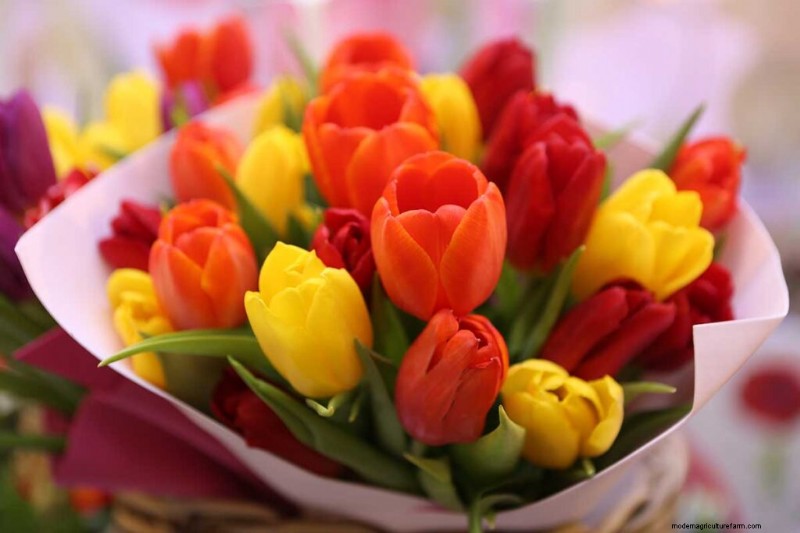
But they have a marvelous flavor that is a mix of asparagus and English peas.
Any culinary creation that could use a hint of those flavors – like egg dishes, salads, veggie dishes, or chicken salad – is fair game.
The petals of some varieties are quite firm, which makes them perfect as a potato chip alternative. Or stuff them as you would endive or lettuce leaves.
Learn how to grow tulips here .
66. Violet
Violets (Viola spp.) are another one of those flowers that appears in every garden but rarely in any kitchen dishes.
Wild violets are tastier but these are generally going to be harder to get your hands on. If you’re up for some foraging and know of a good place to pick, have at it!
Whether cultivated or wild, don’t dry them or sit on them for too long after picking. These close relatives of pansies are best enjoyed fresh.
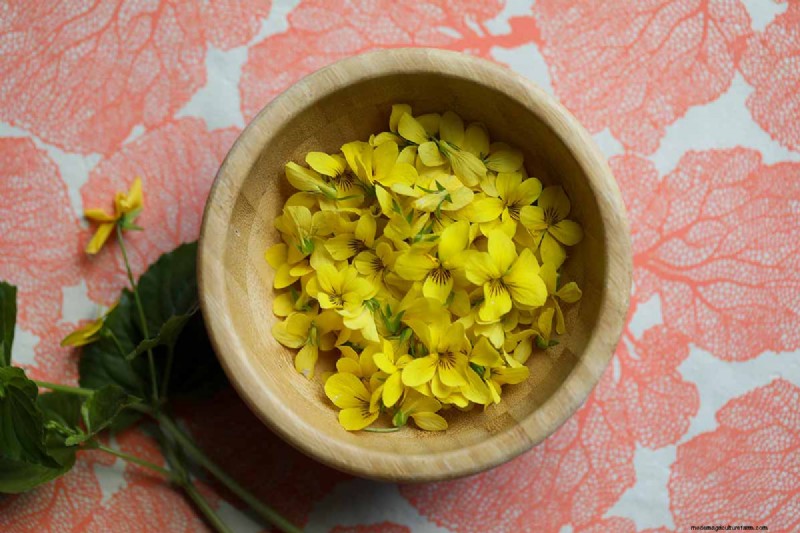
Photo by Kristine Lofgren.
If you can’t eat them right away, wrap the flowers in damp paper towels or float them in a bowl of cold water.
Some other types of flowers require prep in the form of removing the centers or bases first, but you can pop entire violets in your mouth straight off the plant.
These are a classic option for desserts, especially when they’re candied, with a distinct, perfumey flavor.
You often find them in ice cream, candies, marshmallows, cakes, and cookies. But they’re excellent in savory dishes, as well.
Use them in fish salad, chicken curry, egg dishes, and cheese souffle.
One of my favorite recipes for violets is from “The Forgotten Art of Flower Cookery.”
Author Leona Woodring Smith combines pineapple juice, tapioca, sugar, grated lemon peel, raspberries, oranges, orange liqueur, and fresh violets to make a soup. It’s phenomenal.
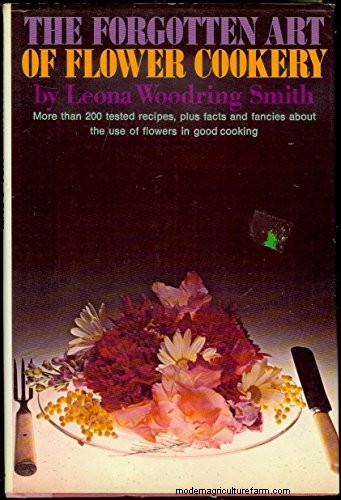
The Forgotten Art of Flower Cookery
While the book is out of print, you can pick up a copy at used bookstores or find it on Amazon . It’s a must-have if you want to expand your flower cookery repertoire.
Learn more about using edible violets in recipes .
64. Sweet Woodruff
I have a soft spot for sweet woodruff (Galium odoratum ) because the shady areas of my dry Utah garden were extremely hard to fill with anything but hostas.
I love a good hosta, but sometimes you need something different.
I dug up a clump of sweet woodruff from my grandma’s yard and put it in my own soil. Within a few years, I had a beautiful green carpet of this wonderful herb.
One person’s (somewhat) invasive ground cover is another’s shady savior, right?
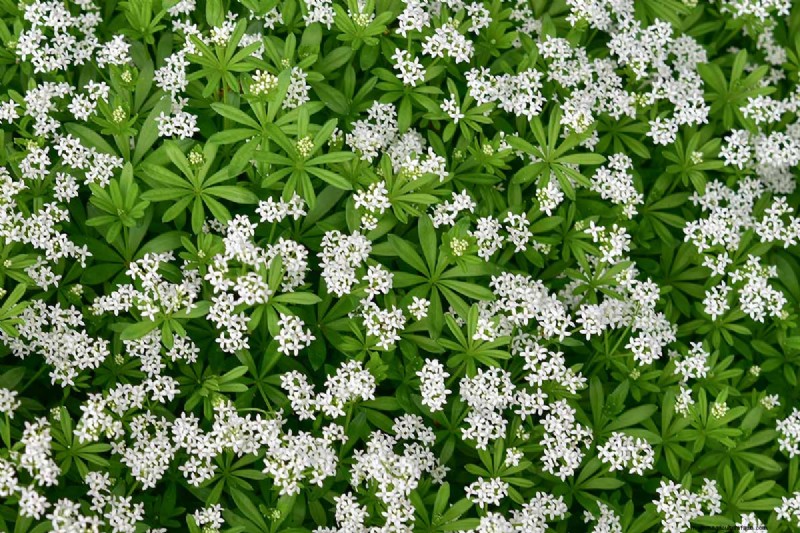
Sweet woodruff has a mild, hay-like flavor, and it can be a touch bitter. May wine is perhaps the most famous use of these flowers in the kitchen.
Years ago, the pleasant-smelling leaves, stems, and flowers were used as a mattress stuffing, which earned this plant the nickname sweet-scented bedstraw.
You can use the flowers to infuse tea or honey, sprinkle them on salads or sandwiches, or use them as a garnish.
Head to Foodal to learn more about using this plant in the kitchen and in your herbal medicine cabinet.
67. Yarrow
Whether you’re growing it intentionally or it’s naturalized on the roadside, yarrow blossoms (Achillea millefolium ) are well worth having around.
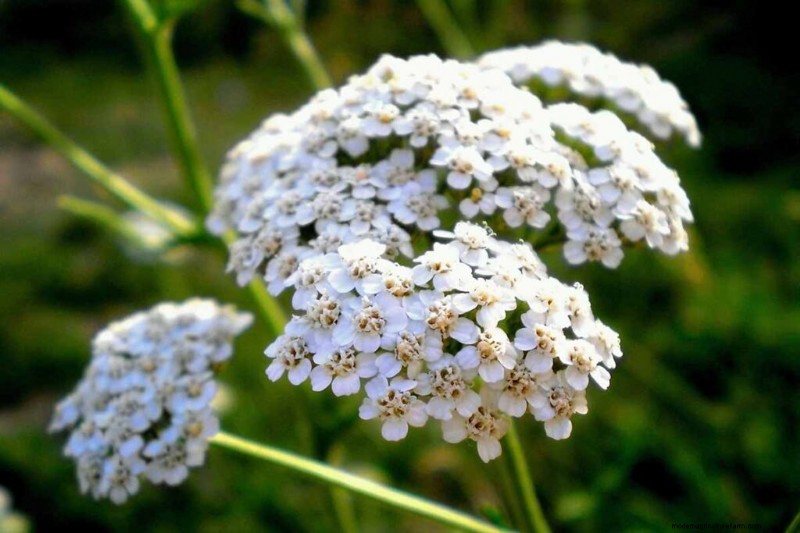
The flowers can be yellow, pink, or white in flat clusters that grow on stalks that can grow to be up to four feet tall.
The flavor is spicy and herbal, with notes of oregano combined with honeyed sweetness. Young blossoms are best as they turn bitter with age. And cooking amplifies the bitterness.
You can use dried yarrow flowers in tea and cocktails, or enjoy them fresh in pasta and rice dishes.
Some other Achillea species are edible, but stick with common yarrow. It has the best flavor.
68. Yucca
Most people in the US haven’t yet caught on to how fantastic yucca flowers are as edibles, but Native Americans and Mexicans make good use of Yucca bachata , and the blooms of all species in the genus are edible.
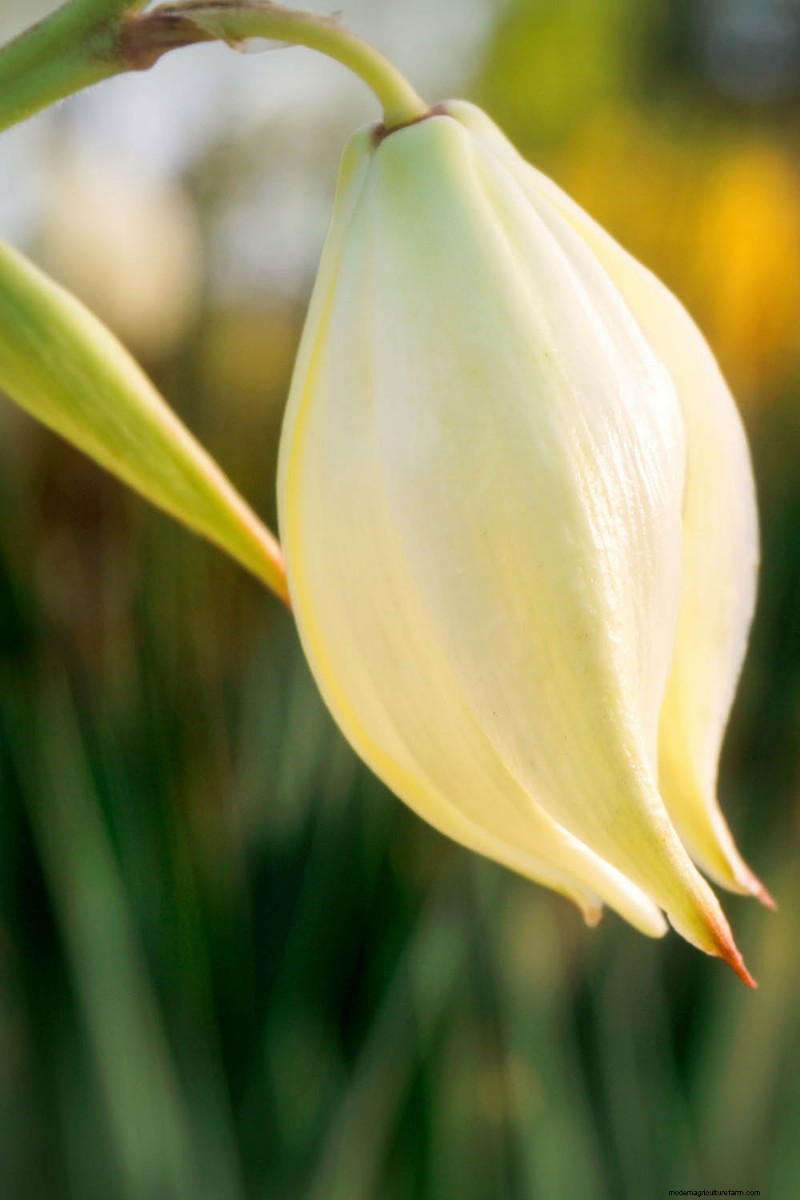
In Mexico, flor de izote (aka yucca flower) is used in steak, egg, and chicken dishes, whereas in El Salvador, it’s most popular in egg dishes, aka flor de izote con huevos.
The flowers are mildly sweet with an asparagus-like flavor. However, all other parts of the plant except the fruits of certain species are toxic, so use caution.
Our guide provides cultivation instructions .
69. Zinnia
A South American native, Zinnia elegans or the common zinnia has bright orange, yellow, red, or magenta flowers with rows and rows of petals.
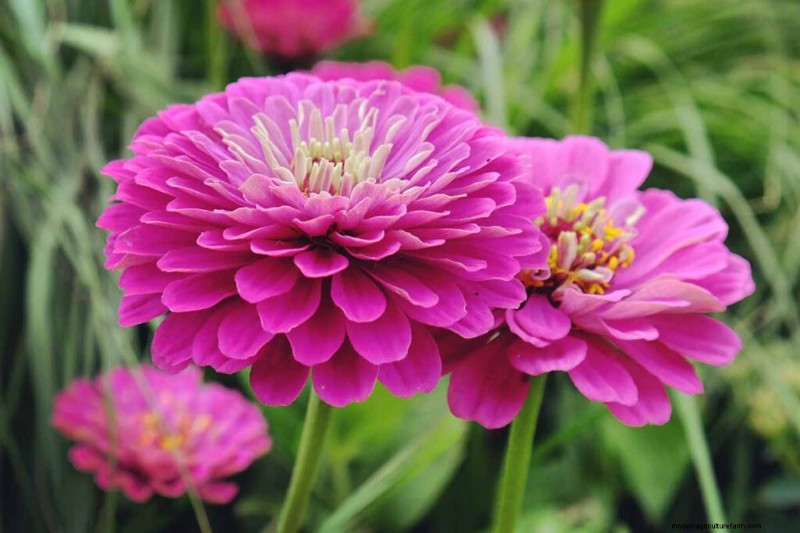
The flavor is slightly bitter, so use the petals sparingly or candy them to mask the bitterness.
Learn more about zinnias and how to grow them here .
A Feast for the Eyes and the Mouth
Most of us wish we had more space and time, which is why growing plants that can do double-duty in some way is so appealing.
But even if you aren’t growing any of these species already and you’re simply looking for a way to expand your cooking horizons, foraging for many of these is also possible.
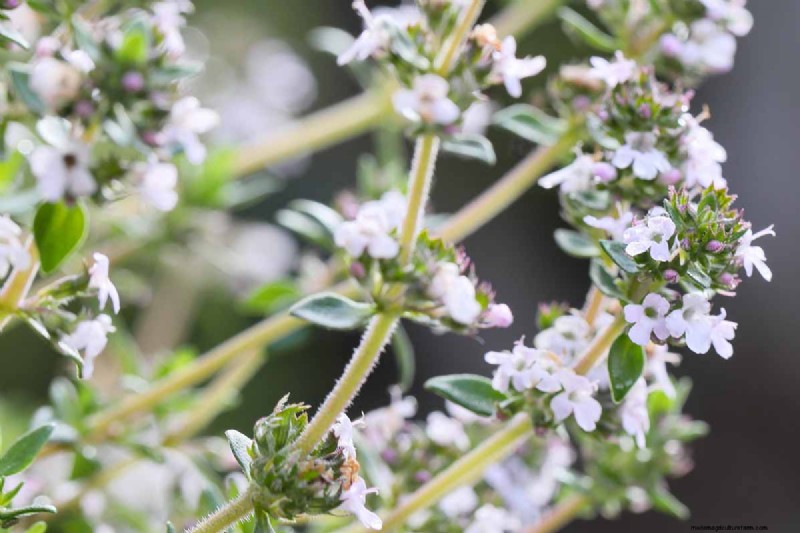
Photo by Kristine Lofgren.
Edible flowers are a feast for the eyes and the mouth. There’s something special about tucking into a dish of flowers that brings to mind lazy summer afternoons, or the optimism of spring.
But the species listed above aren’t just good as garnishes. Most are supremely flavorful in their own right, with many of them just waiting to be rediscovered as a worthy ingredient.
So tell us:what types of flowers are you going to dine on? Did we miss any that you particularly love? How do you use your edible flowers? Let us know in the comments.
And if you’re looking for more information about growing flowers in your garden , check out these guides next:
- 21 of the Best Flowers for Mass Planting
- Birds, Bees, and Beauty:Tips for Growing a Native Wildflower Landscape at Home
- 15 of the Best Flowering Ground Covers to Meet Landscaping Challenges


